



புறநானூறு 76
பாடல் · The poem
Tap a word to see where else it occurs.
பொருள் · Meaning in TamilAI
ஒருவனை ஒருவன் கொல்வதும், ஒருவன் அழிவதும் புதியது அன்று; இது இந்த உலகத்தின் இயல்பு. ஆனால் இன்றைக்கு முன் இப்படிப்பட்டதை நாங்கள் கேட்டதில்லை. ஊர்ப் பொதுவிடத்தில் நிற்கும் பருத்த அடிமரமுடைய வேம்பின் பெரிய கிளைகளில் தோன்றிய ஒளிமிக்க தளிர்களை, நீண்ட கொடியுடைய உழிஞையின் கொடிகளோடு கலந்து நெருக்கமாகத் தொடுத்த, தேன் சொட்டும் கண்ணியையும், தழையால் ஆன மாலையையும் அழகுறச் சூடி, பாடலுடன் தெளிந்த ஓசையுடைய கிணைப்பறை முழங்க, காண்பதற்கு அழகாக, நாடு முழுவதையும் செல்வமாக உடைய, புதிய பொன் அணிகலன் அணிந்த செழியனின் பெருமையையும் தலைமையையும் அறியாமல், 'போரிடுவோம்' என்று ஒன்றுகூடித் தன்மேல் வந்த, வீரக்கழல் அணிந்த எழுவரின் சிறந்த வெற்றிகள் எல்லாம் அடங்கும்படி, அவன் தான் ஒருவனாகவே நின்று போரிட்டுக் களத்தில் அவர்களைக் கொன்றான்!
இது வாகைத் திணை, வெற்றியைப் பாடுவது; துறை அரச வாகை. பாடியவர் இடைக்குன்றூர் கிழார்; பாடப்பட்டோன் பாண்டியன் தலையாலங்கானத்துச் செருவென்ற நெடுஞ்செழியன். பாண்டியரின் அடையாளமான வேப்பம்பூ மாலையை அணிந்து, ஒருவனாக எழுவரை வென்றதையே புலவர் வியக்கிறார். அந்த எழுவரின் பெயர்கள் பாடலில் இல்லை.
ஆங்கிலம் · English translationAI
Translation
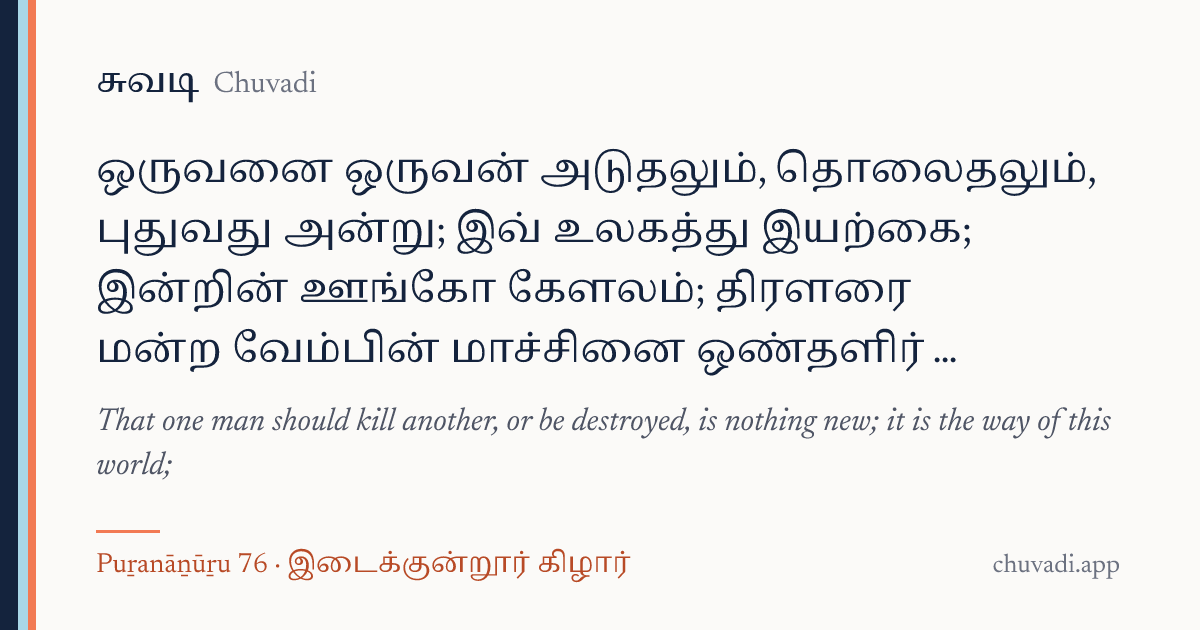
- That one man should kill another, or be destroyed,
- is nothing new; it is the way of this world;
- but before today we have never heard of this: the thick-trunked
- neem of the common ground, with bright shoots from its great branches
- woven in with the tendrils of the long-stemmed uḻiñai creeper,
- a honey-dripping chaplet, densely strung,
- with a garland of leaves, wearing them splendidly,
- while the clear kiṇai drum sounds with song, a sight worth seeing,
- Ceḻiyaṉ, whose wealth is a whole land, wearing fresh gold:
- not knowing his strength and his greatness, they banded together,
- saying 'We shall fight!' and came at him,
- seven men with fine anklets, and their proud victories were quelled
- when he, one man alone, fought them and killed them on the field!
What the poem says
Iṭaikkuṉṟūr Kiḻār celebrates the Pāṇṭiya Neṭuñceḻiyaṉ, called in the colophon 'who won the battle at Talaiyālaṅkāṉam'. The tiṇai is vākai, victory, and the turai arasa vākai is the victory of a king.
The poet begins with a calm general truth: men kill and are killed, and there is nothing new in that. What is new is what has happened today. Ceḻiyaṉ went into battle wearing the neem, the Pāṇṭiya emblem, its bright shoots woven together with uḻiñai creeper into a chaplet, and a garland of leaves, while the kiṇai drum sounded. Seven warriors with heroic anklets, unaware of how strong he was, joined forces and came against him, and he alone fought and destroyed them all.
The weight of the poem lies in the contrast between 'one' and 'seven' and in the wonder of 'we have never heard before today'. The poem does not name the seven. The uḻiñai creeper in the chaplet is usually linked with siege warfare; here it is simply part of the war garland.