



புறநானூறு 77
பாடல் · The poem
Tap a word to see where else it occurs.
பொருள் · Meaning in TamilAI
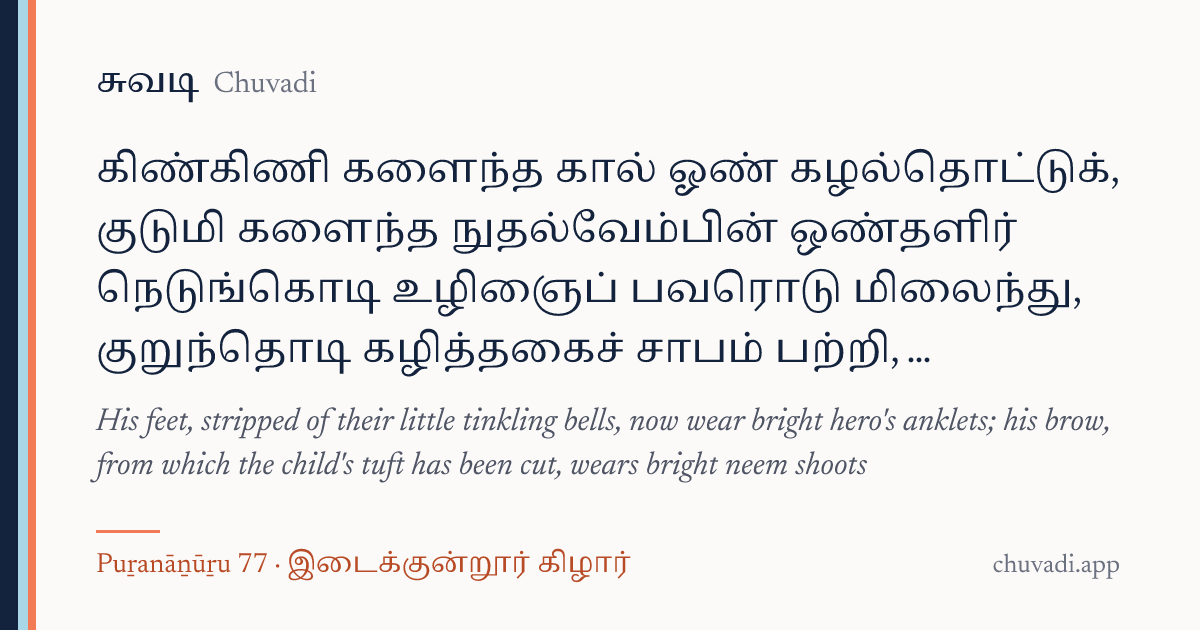
சிறுவனாக இருந்தபோது அணிந்த கிண்கிணி என்னும் சதங்கைகளைக் கழற்றிய கால்களில் ஒளிரும் வீரக்கழலை அணிந்து, குழந்தைக் குடுமி களையப்பட்ட நெற்றியில் வேம்பின் ஒளிமிக்க தளிர்களை நீண்ட கொடியுடைய உழிஞையின் கொடிகளோடு சேர்த்துச் சூடி, சிறிய வளையல்களைக் கழற்றிய கையில் வில்லைப் பற்றி, நீண்ட தேரின் முகப்பு விளங்கும்படி நிற்கும் இவன் யாரோ? இவனுடைய கண்ணி வாழ்வதாக! போர்மாலையை அணிந்திருந்தாலும் குழந்தைப் பருவத்தின் ஐம்படைத் தாலியை இன்னும் கழற்றவில்லை; பால் குடிப்பதை இப்போதுதான் விட்டவன். சினந்து தன்மேல் வந்த, போர்ப்பழக்கம் இல்லாத புதிய வீரர்களை அழுந்தப் பிடித்து, அகன்ற வானம் வரை ஆரவாரம் எழும்படி வென்றான்; அதற்காக அவன் மகிழவும் இல்லை, அவர்களை இகழவும் இல்லை; அதைவிடக் குறைவாகவே காட்டினான்.
இது வாகைத் திணை; துறை அரச வாகை, அரசனின் வெற்றியைக் கூறுவது. பாடியவர் இடைக்குன்றூர் கிழார்; பாடப்பட்டோன் பாண்டியன் தலையாலங்கானத்துச் செருவென்ற நெடுஞ்செழியன். சிறுவனாகவே போர்க்களம் புகுந்து வென்றதையும், வெற்றியில் அவன் காட்டிய அடக்கத்தையும் புலவர் வியக்கிறார். இறுதித் தொடரின் சரியான பொருள் சற்று ஐயத்துக்கு உரியது.
ஆங்கிலம் · English translationAI
Translation
- His feet, stripped of their little tinkling bells, now wear bright hero's anklets;
- his brow, from which the child's tuft has been cut, wears bright neem shoots
- woven with the tendrils of the long-stemmed uḻiñai creeper;
- his hand, from which the small bangles were slipped off, grips a bow;
- he stands so that the crest of his tall chariot gleams:
- who can he be? Long live his chaplet! He has put on a warrior's garland,
- yet he has not even taken off his child's amulet; just weaned from milk,
- the raw young fighters who came on at him in fury
- he seized and crushed, so that shouts rose to the wide sky,
- and he did not exult, he did not scorn them, still less than that.
What the poem says
Iṭaikkuṉṟūr Kiḻār marvels at the Pāṇṭiya Neṭuñceḻiyaṉ, called 'who won the battle at Talaiyālaṅkāṉam', as a boy warrior. The tiṇai is vākai, victory, and the turai arasa vākai, a king's victory.
The poem is built on pairs of things put off and put on. The tinkling bells of a child's feet have been replaced by the warrior's anklet; the child's tuft of hair has been cut and a chaplet of neem and uḻiñai sits on his forehead; the little bangles have come off his wrist and his hand holds a bow. Yet he still wears the tāli, a child's amulet, and has only just left off milk. The poet, seeing him stand in his tall chariot, asks in wonder who he can be.
The last lines describe his conduct in battle. Raw, unseasoned warriors attacked him; he seized them and broke them while the sky rang with the noise. What impresses the poet most is his composure: he neither gloated over his victory nor mocked his enemies.
The final phrase, ataṉiṉum ilaṉē, 'still less than that', seems to stress his restraint; its exact force is not quite clear.