



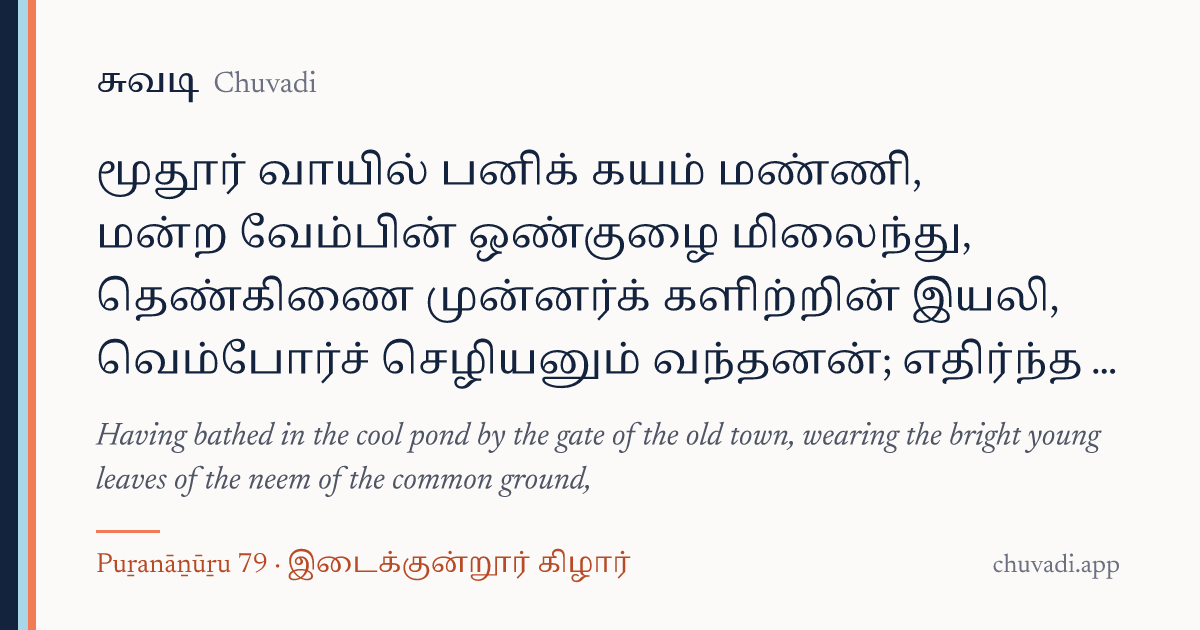
புறநானூறு 79
பாடல் · The poem
Tap a word to see where else it occurs.
பொருள் · Meaning in TamilAI
பழைய ஊரின் வாயிலில் உள்ள குளிர்ந்த குளத்தில் நீராடி, ஊர்ப் பொதுவிடத்தில் உள்ள வேம்பின் ஒளிமிக்க இளந்தளிரைச் சூடி, தெளிந்த ஓசையுடைய கிணைப்பறைக்குப் பின்னால் ஆண் யானை போல நடந்து, கொடிய போர் செய்யும் செழியனும் வந்துவிட்டான். அவனை எதிர்த்து வந்த போர் அனுபவமில்லாத வீரர்களோ பலர். அவர்களில் யாரேனும் எஞ்சுவார்களோ? பகல் பொழுது மிகவும் சிறியதே!
இது வாகைத் திணை; துறை அரச வாகை. பாடியவர் இடைக்குன்றூர் கிழார்; பாடப்பட்டோன் பாண்டியன் தலையாலங்கானத்துச் செருவென்ற நெடுஞ்செழியன். இறுதி அடிக்கு இரண்டு பொருள் கொள்ளலாம்: இத்தனை பேரையும் அழிக்கப் பகல் போதாது என்பதும், இச்சிறிய பகலைக் கூட அவர்கள் தாண்ட மாட்டார்கள் என்பதும்.
ஆங்கிலம் · English translationAI
Translation
- Having bathed in the cool pond by the gate of the old town,
- wearing the bright young leaves of the neem of the common ground,
- moving like a bull elephant behind the clear kiṇai drum,
- Ceḻiyaṉ of fierce war has come; and those who face him,
- the raw warriors, are many;
- will any of them be left? The day is far too short!
What the poem says
A six-line sketch by Iṭaikkuṉṟūr Kiḻār of the Pāṇṭiya Neṭuñceḻiyaṉ, 'who won the battle at Talaiyālaṅkāṉam', going out to fight (tiṇai vākai, victory; turai arasa vākai, a king's victory).
The king performs simple, ritual-looking acts: he bathes in the cool pond at the gate of his ancient city and puts on the leaves of the neem tree that stands in the common ground, the tree that is the Pāṇṭiya emblem. Then he walks out like a tusker, with the kiṇai drum sounding before him. The enemy are many, and all of them untried.
The last line is a terse question with a terse answer, and it can be taken in two ways. Either the day is too short for so many to be killed, so some may survive till nightfall, or the enemy will not last even this short day. The irony in both readings is the same: the many are no match for the one.