



புறநானூறு 80
பாடல் · The poem
Tap a word to see where else it occurs.
பொருள் · Meaning in TamilAI
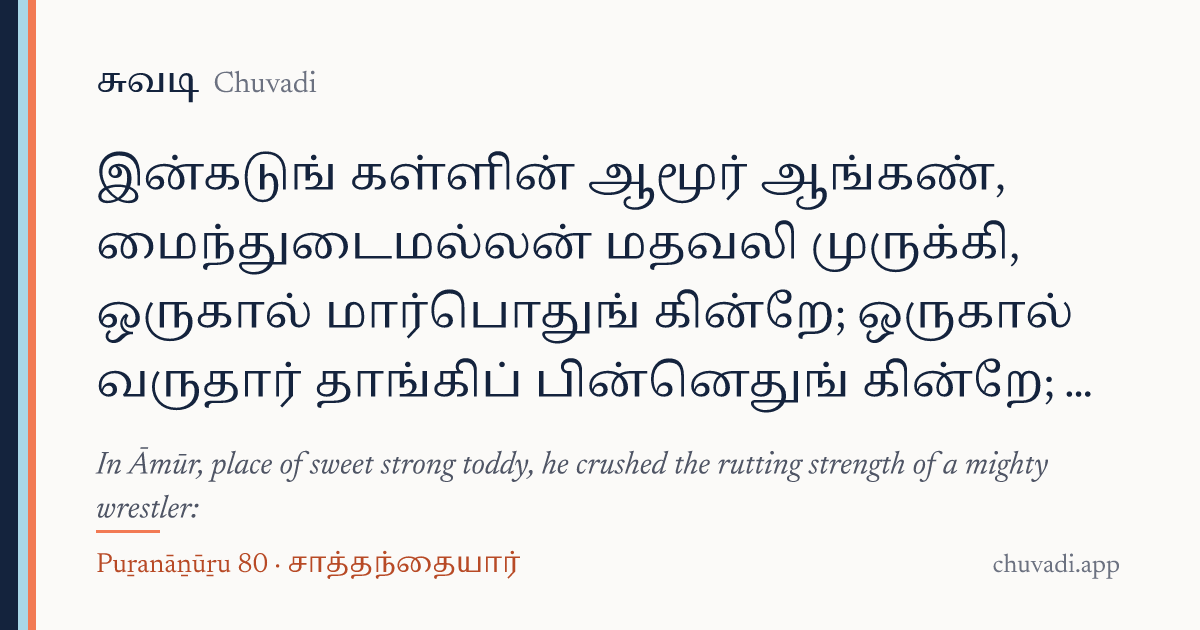
இனிய, கடுமையான கள் கிடைக்கும் ஆமூரில், வலிமையுடைய ஒரு மல்லனின் மதம் கொண்ட வலிமையை அழித்தான். ஒரு காலை அவனுடைய மார்பின் மேல் அழுத்தி வைத்தான்; மற்றொரு காலால் அவன் பாய்ந்து வரும் வேகத்தைத் தாங்கிப் பின்னால் ஒதுங்கி நின்றான். தனக்கு அருள் செய்தாலும் செய்யாவிட்டாலும், வெற்றிப் போர் புரியும், போரில் எதிர்க்க அரிய தித்தன் இதைக் காண்பானாக! பசித்த யானை மூங்கிலைப் பற்றிப் போராடி இரண்டு முனைகளும் ஒடியும்படி அடிப்பது போல, களத்தில் புகுந்து எதிரியை வென்று அழிக்கும் இந்த மல்லனின் நிலையை அவன் காணட்டும்!
இது தும்பைத் திணை, போரைப் பாடுவது; துறை எருமை மறம், தனியாக நின்று எதிரியைத் தாங்கும் வீரத்தைக் கூறுவது. பாடியவர் சாத்தந்தையார்; பாடப்பட்டோன் சோழன் போர்வைக்கோப் பெருநற்கிள்ளி. தித்தன் இவ்விளைஞனின் தந்தை என்பது மரபுச் செய்தி. நான்காம் அடியில் 'பின்னெதுங்கின்றே' என அச்சில் இருப்பதைப் 'பின்னொதுங்கின்றே' எனக் கொண்டோம்; 'பணை' என்பது மூங்கில் எனக் கொண்டோம்.
ஆங்கிலம் · English translationAI
Translation
- In Āmūr, place of sweet strong toddy,
- he crushed the rutting strength of a mighty wrestler:
- with one leg he pressed down on his chest; with the other leg
- he held off the oncoming rush and stepped back;
- whether he shows favour or shows none, of victorious war,
- Tittaṉ, hard to fight, let him see this indeed:
- like an elephant, hungry, struggling with a bamboo,
- striking it till both its ends break,
- the wrestler who enters the arena, overcomes and kills, see him so!
What the poem says
Cāttantaiyār sings of the Cōḻa Pōrvaikkōp Perunaṟkiḷḷi. The tiṇai is tumpai, combat, and the turai erumai maṟam, 'buffalo valour', describes a fighter who stands firm and alone against the enemy; here the combat is a wrestling bout.
At Āmūr, a town known for its strong toddy, the king has broken the strength of a powerful wrestler. The poet gives a precise picture of the hold: one leg planted on the opponent's chest, the other bracing against his rush. The final image compares the king to a hungry elephant that grabs a bamboo and smashes it until both ends snap.
The poet wishes that Tittaṉ, 'hard to fight, of victorious war', could see this, 'whether he shows favour or not'. Tradition makes Tittaṉ the young king's father and speaks of a coolness between them; the poem itself says only that Tittaṉ might or might not be generous, and that he should witness the deed.
In line 4 the edition prints piṉṉetuṅkiṉṟē; the reading taken is piṉṉotuṅkiṉṟē, 'drew back'. In line 7, paṇai is taken as bamboo; it could also mean a stalk or a large branch. 'Wrestler' in the last line refers to the king himself.