



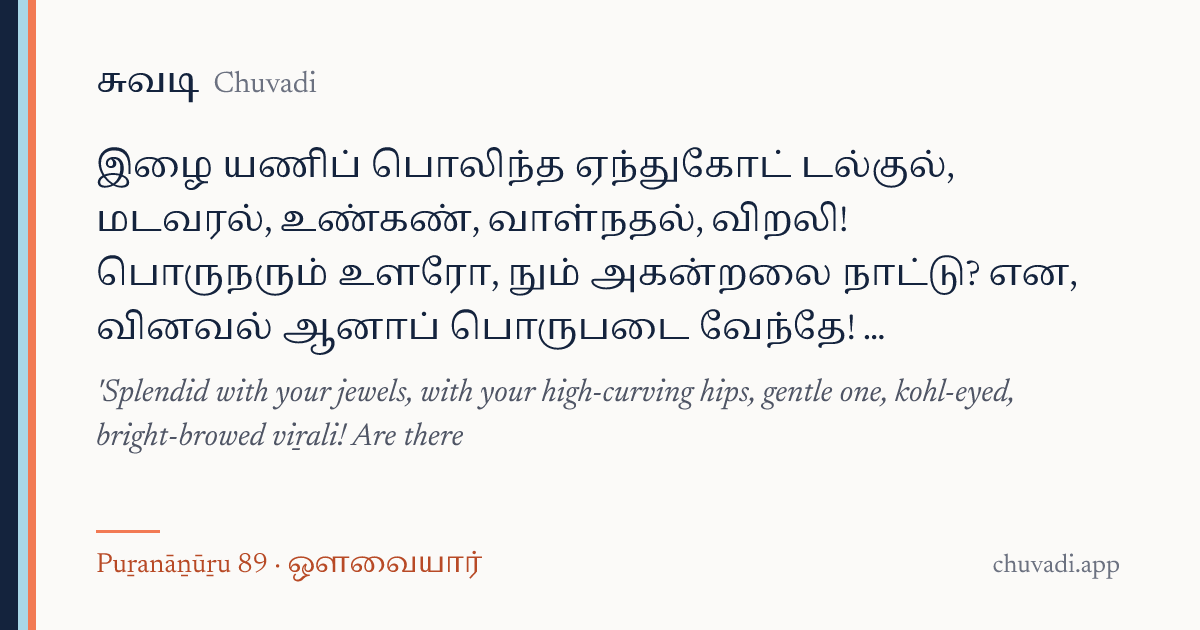
புறநானூறு 89
பாடல் · The poem
Tap a word to see where else it occurs.
பொருள் · Meaning in TamilAI
'அணிகலன்களால் பொலிவுற்று, உயர்ந்த இடையுடைய, மென்மையான, மை தீட்டிய கண்களும் ஒளிரும் நெற்றியும் உடைய விறலியே! உங்கள் அகன்ற நாட்டில் போரிடுபவர்களும் இருக்கிறார்களா?' என்று கேட்பதை நிறுத்தாத, போர் செய்யும் படையுடைய வேந்தனே! அடிக்க ஓங்கிய கோலுக்கு அஞ்சாத பாம்பைப் போன்ற இளம் வீரர்கள் எங்களிடம் இருக்கிறார்கள். அது மட்டுமன்று, ஊர்ப் பொது மன்றத்தில் தொங்கும், வாரால் இறுக்கிக் கட்டிய தண்ணுமைப் பறையின் தெளிந்த முகத்தில் காற்று மோதும் ஒலியைக் கேட்டாலும், 'அது போர்!' என்று எழும் என் தலைவனும் இருக்கிறான்!
இது தும்பைத் திணை; துறை தானை மறம். பாடியவர் ஔவையார்; பாடப்பட்டோன் அதியமான் நெடுமானஞ்சி. விறலி பகை மன்னனுக்கு விடை சொல்வதாகப் பாடல் அமைந்துள்ளது. இரண்டாம் அடியில் 'வாள்நதல்' என அச்சில் இருப்பதை 'வாள்நுதல்' எனக் கொண்டோம்.
ஆங்கிலம் · English translationAI
Translation
- 'Splendid with your jewels, with your high-curving hips,
- gentle one, kohl-eyed, bright-browed viṟali! Are there
- warriors at all in your wide land?' So
- you never stop asking, king of a fighting army!
- Like snakes that have no fear of the striking stick,
- there are young warriors among us; and not only that,
- there is my lord, who, if he hears the drum
- hung tight-laced in the common hall struck by the wind on its clear face,
- will say 'That is war!'
What the poem says
Here Auvaiyār takes the voice of a viṟali, a woman singer of a bardic troupe, who answers a hostile king. The patron is Atiyamāṉ Neṭumāṉ Añci, and the tiṇai and turai are again tumpai, battle, and tāṉai maṟam, the valour of an army.
The enemy king flirts with the viṟali, praising her jewels, hips, eyes and brow, and keeps asking whether there are any fighting men in her country, as though there were none. Her answer comes in two parts. First, there are young warriors who are like snakes that do not flinch from the stick raised to strike them. Second, there is her lord, so eager for war that if the wind merely brushes the drum hanging in the common meeting place, he takes the sound as a call to battle.
The poem uses the viṟali's position, a performer who moves between courts, to deliver a warning in a light tone. Line 6, ciṟuvaṉ maḷḷar, is taken as 'young warriors'. In line 2 the edition prints vāḷnatal, read here as vāḷnutal, 'bright brow'. Line 7 is taken as a drum hanging in the common hall (potuvil).