



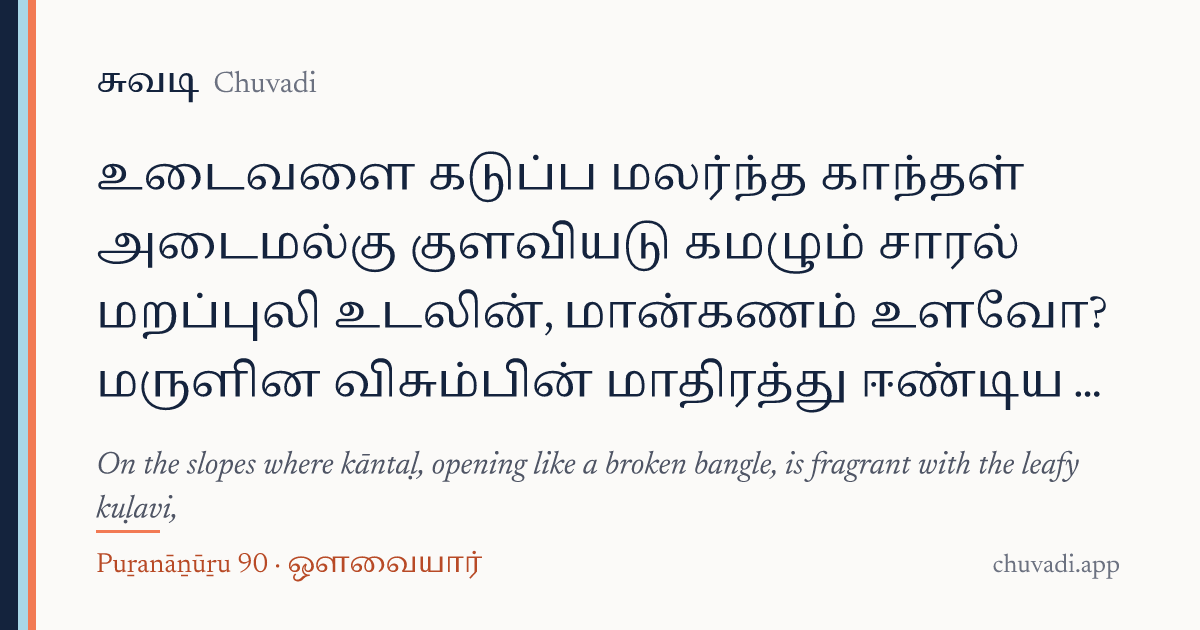
புறநானூறு 90
பாடல் · The poem
Tap a word to see where else it occurs.
பொருள் · Meaning in TamilAI
உடைந்த சங்கு வளையல் போல மலர்ந்த காந்தள் பூக்களும், இலைகள் அடர்ந்த காட்டு மல்லிகையும் மணக்கும் மலைச்சரிவில், வீரம் மிக்க புலி சினந்தால், மான் கூட்டங்கள் அங்கே இருக்குமோ? கதிரவன் சினந்து ஒளிர்ந்தால், மயங்கிய வானத்தின் திசைகளில் திரண்டிருந்த இருளும் இருக்குமோ? அச்சு வரை புதைந்து நிலத்தில் சிக்கிக் கொண்ட பண்டம் ஏற்றிய வண்டியின் ஆழ்ந்த சேற்றைப் பற்றிச் சொல்லப்படும் இடத்திலும், பரந்த மணலைச் சிதறச் செய்து, கற்களைப் பிளந்து நடக்கும் பெருமிதமுடைய காளைக்குக் கடக்க முடியாத துறையும் உண்டோ? கதவின் தாழ்ப்பாள் மரம் போன்ற, முழங்கால் வரை நீண்ட பெரிய கைகளையும், தவறாத வலிய கைகளையும் உடைய மழவர் பெருமானே! நீ போர்க்களத்தில் புகுந்தால், இந்தப் பெரிய நிலத்தைக் கைப்பற்றுவோம் என்று முழங்கும் வீரர்களும் எஞ்சியிருப்பார்களோ?
இது தும்பைத் திணை; துறை தானை மறம். பாடியவர் ஔவையார்; பாடப்பட்டோன் அதியமான் நெடுமானஞ்சி. ஆறு முதல் ஒன்பது வரையுள்ள அடிகளின் சொல்லமைப்பு சற்றுச் சிக்கலானது; பொதுப் பொருள் தெளிவாக உள்ளது.
ஆங்கிலம் · English translationAI
Translation
- On the slopes where kāntaḷ, opening like a broken bangle,
- is fragrant with the leafy kuḷavi,
- if the fierce tiger rages, will herds of deer remain?
- The darkness gathered in the quarters of the bewildered sky,
- will any be left, if the sun blazes?
- Where the loaded cart struck to the axle sank and stuck in the ground,
- the deep mire that men tell of,
- spreading the wide sand, splitting the stones, as it walks,
- is there a ford too hard for the proud bull?
- With huge arms that reach the knees, like a door-bar,
- strong hands that never fail, great one of the Maḻavar!
- Taking the soil of the wide earth, roaring,
- will there be warriors left, when you enter the field?
What the poem says
Auvaiyār addresses Atiyamāṉ Neṭumāṉ Añci directly, calling him 'great one of the Maḻavar' (tiṇai tumpai, battle; turai tāṉai maṟam, the valour of an army).
The poem is a chain of three rhetorical questions, each expecting the answer no, followed by the real question. When a tiger rages on the hill slopes fragrant with kāntaḷ and wild jasmine, do herds of deer stay? When the sun blazes, is there any darkness left in the sky? Is there any ford or bog too hard for a proud bull, one that scatters sand and cracks stones as it walks, even where a loaded cart once sank to its axle? The answer each time is that the weaker thing vanishes.
Then she turns to the king, describing his long arms that reach to his knees and are as heavy as the bar of a gate, and asks whether any warrior who boasts of conquering land will be left when he enters battle.
The kāntaḷ flower is compared to a broken bangle, perhaps for its curved, split petals. Lines 6 to 9 are compressed and their syntax is not entirely certain, though the overall sense is clear.