



புறநானூறு 91
பாடல் · The poem
Tap a word to see where else it occurs.
பொருள் · Meaning in TamilAI
வெற்றி தரும், தவறாமல் தாக்கும் வாளை ஏந்தி, பகைவர்கள் போர்க்களத்தில் வீழும்படி வென்ற, வீரக்கழலும் தொடியும் அணிந்த பெரிய கைகளையுடைய, நிறைந்த களிப்புத் தரும் கள்ளையுடைய அதியர்களின் தலைவனே! போரில் வென்று பெற்ற செல்வமும் பொன்மாலையும் உடைய அஞ்சியே! பால் போன்ற வெண்மையான பிறை நெற்றியில் விளங்கும் திருமுடியும், நீலமணி போன்ற கழுத்தும் உடைய ஒப்பற்ற இறைவனைப் போல, பெருமானே, நீ நிலைபெற்று வாழ்வாயாக! பழமையான பெரிய மலையின் பிளவில், ஏறுவதற்கு அரிய உச்சியில் பெற்ற, சிறிய இலைகளையுடைய நெல்லி மரத்தின் இனிய கனியை, அதனால் உனக்கு உண்டாகும் பயனை எண்ணாமல், அதை உன் மனத்துக்குள்ளேயே அடக்கிக் கொண்டு, எனக்குச் சாவு நீங்கும்படி எனக்குக் கொடுத்தாயே!
இது தும்பைத் திணை; துறை வாழ்த்தியல், புரவலனை வாழ்த்துவது. பாடியவர் ஔவையார்; பாடப்பட்டோன் அதியமான் நெடுமானஞ்சி. பிறையும் நீலக் கழுத்தும் உடைய இறைவன் சிவபெருமான். 'ஆதல் நின்னகத்து அடக்கி' என்ற தொடரை, கனியின் ஆற்றலைத் தனக்குள் மறைத்து என்று பொருள் கொண்டோம்.
ஆங்கிலம் · English translationAI
Translation
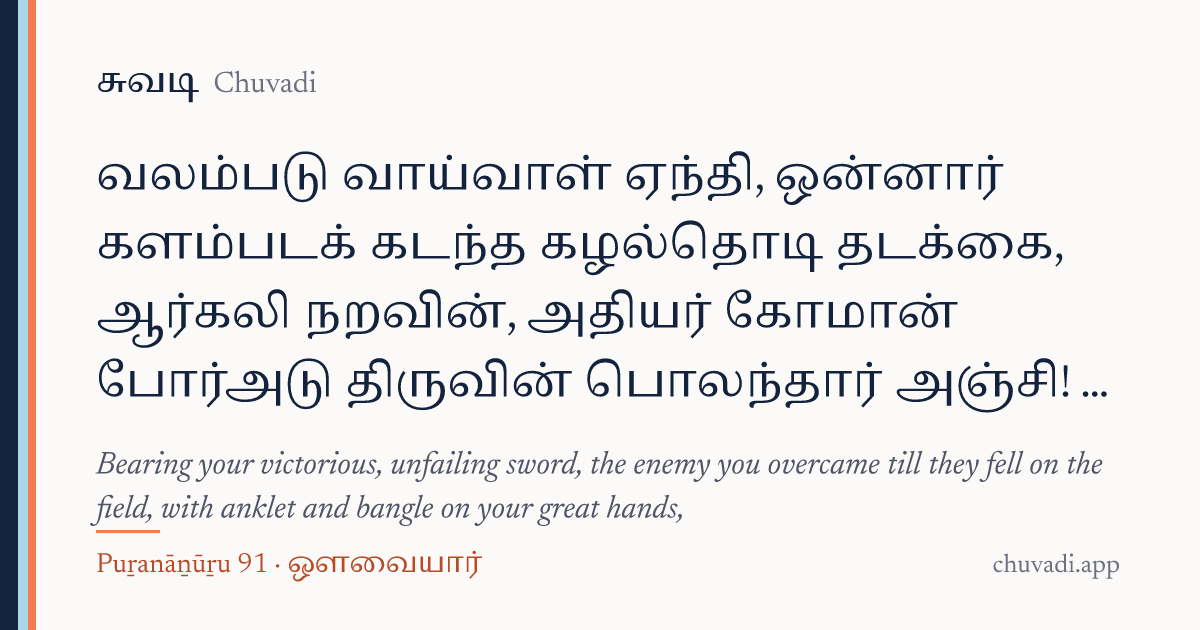
- Bearing your victorious, unfailing sword, the enemy
- you overcame till they fell on the field, with anklet and bangle on your great hands,
- lord of the Atiyar, rich in toddy that brings full joy,
- Añci of the golden garland, of fortune won in war!
- Like the One whose head is bright with the crescent on his brow, white as milk,
- whose throat is dark as a blue gem,
- may you endure, great one! You, from the ancient
- great mountain, from the hard height of its cleft,
- the sweet fruit of the small-leaved nelli, never thinking
- of what it would do for you, keeping that within yourself,
- so that death would leave me, you gave it to me!
What the poem says
This is one of the best-known poems of Auvaiyār, addressed to her patron Atiyamāṉ Neṭumāṉ Añci, lord of the Atiyar. The tiṇai is given as tumpai, battle, and the turai vāḻttiyal is a poem of blessing; the battle setting is present only in the opening praise, and the heart of the poem is gratitude.
The first four lines praise him as a conqueror: his sword never fails, his hands wear the warrior's anklet and bangle, his land is rich in toddy and his wealth is won in war. Then comes the blessing: may he endure for ever like the god whose head shines with a crescent moon and whose throat is dark blue, that is, Śiva.
The reason for the blessing follows. From a hard-to-reach crevice high on an ancient mountain the king obtained a fruit of the nelli, the small-leaved gooseberry tree. Its power was to keep death away, and rather than eat it himself he kept that knowledge to himself and gave it to the poet. Line 10 is compressed: ātal niṉṉakattu aṭakki is taken as 'keeping within yourself what it would bring about'. The poem says only that the fruit was meant to ward off death; the longer story told about it belongs to later tradition.