



புறநானூறு 92
பாடல் · The poem
Tap a word to see where else it occurs.
பொருள் · Meaning in TamilAI
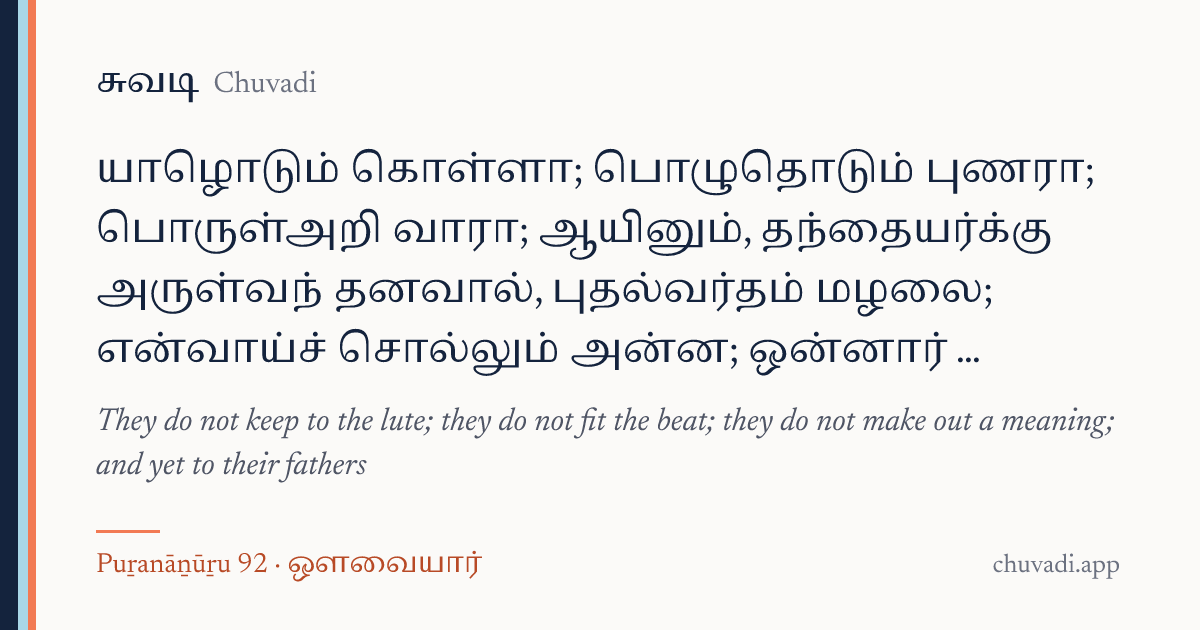
குழந்தைகளின் மழலைச் சொற்கள் யாழோடு இசைவதில்லை; காலத்தின் தாளத்தோடு பொருந்துவதில்லை; பொருள் விளங்கும்படியும் இருப்பதில்லை. ஆனாலும், அந்த மகன்களின் மழலைச் சொற்கள் தந்தையருக்கு அன்பை உண்டாக்குகின்றன. என் வாயிலிருந்து வரும் சொற்களும் அப்படிப்பட்டவையே. பகைவர்களின் காவலுடைய மதில்களையும் பல அரண்களையும் வென்ற நெடுமான் அஞ்சியே! நீ அவற்றை அருளோடு ஏற்றுக் கொள்வதால்தான் அவை உனக்கு இனிக்கின்றன.
இது தும்பைத் திணை; துறை இயன்மொழி, புரவலனின் இயல்பான நற்பண்பைக் கூறுவது. பாடியவர் ஔவையார்; பாடப்பட்டோன் அதியமான் நெடுமானஞ்சி. தந்தை குழந்தையின் மழலையை விரும்புவது போல் அரசன் தம் பாடலை விரும்புவதாகப் புலவர் அடக்கத்தோடு கூறுகிறார்.
ஆங்கிலம் · English translationAI
Translation
- They do not keep to the lute; they do not fit the beat;
- they do not make out a meaning; and yet to their fathers
- they bring tenderness, the babbling words of their sons;
- the words from my mouth are like that; the enemy's
- guarded walls and many forts you have overcome,
- Neṭumāṉ Añci! and it is because you show them grace.
What the poem says
A short, tender poem by Auvaiyār to Atiyamāṉ Neṭumāṉ Añci. The tiṇai is tumpai, battle, which here appears only in the epithet of the king as the taker of enemy forts; the turai iyaṉmoḻi describes a patron's natural qualities, here his kindness.
The poem is one extended comparison. A small son's babble does not match the lute's melody or the rhythm of the moment, and has no clear meaning, yet it fills his father with love. My own words, says the poet, are like that; they please you only because you look on them with grace, as a father looks on his child.
It is a gesture of modesty, but also of intimacy: the poet places herself in the position of a child before a fond parent, and the king who storms walls and fortresses is shown as one who listens gently. The final phrase, nī aruḷal māṟē, 'because you show grace', gives the reason for the comparison.