



புறநானூறு 93
பாடல் · The poem
Tap a word to see where else it occurs.
பொருள் · Meaning in TamilAI
இறுக்கிக் கட்டிய முரசு 'இழும்' என்று முழங்கப் படையெடுத்துச் சென்று போரில் வெல்வது உனக்கு ஒரு பொருட்டா? உன்னை எதிர்த்து வந்தவர்கள் உன் முன்படையைத் தாங்கவும் முடியாமல், அஞ்சிச் சிதறி ஓடினர். ஓடுவதையே பழக்கமாகக் கொண்ட பெருமையில்லாத அம்மன்னர்கள் நோயால் இறந்தால், அவர்களின் உடலை எடுத்து, அன்பை மறந்து, அவர்களின் இழிவைப் போக்குவதற்காக, அறநெறியைப் பின்பற்றும் நான்கு வேதங்களையும் அறிந்த முதல்வர்கள், முறைப்படி பரப்பிய பசும் தருப்பைப் புல்லின் மேல் கிடத்தி, 'வீரத்தையே பற்றுக்கோடாகக் கொண்டு நல்ல போரில் வீழ்ந்த, நீண்ட கழல் அணிந்த வீரர்கள் சென்ற உலகத்துக்கு நீயும் செல்வாயாக' என்று சொல்லி, வாளால் பிளந்து புதைப்பார்கள். அதிலிருந்தும் அவர்கள் தப்பினர். ஏனெனில், வரிகளையுடைய வண்டுகள் ஒலிக்கும், வாயில் வழியும் மதநீருடைய தலைமை யானை கொலைக்களத்தில் வீழ்ந்து கிடக்க, கடுமையான போர் சிதையும்படி அழித்து, பெருந்தகையே, நீ மார்பில் சிறந்த புண்ணைப் பெற்றாய்.
இது வாகைத் திணை; துறை அரச வாகை. பாடியவர் ஔவையார்; பாடப்பட்டோன் அதியமான் நெடுமானஞ்சி. நோயால் இறந்த அரசர்களின் உடலை வாளால் வெட்டிப் புதைக்கும் வழக்கத்தைப் பாடல் குறிப்பிடுகிறது. இறுதி அடிகளின் கருத்து உறுதியாகத் தெரியவில்லை: பகை மன்னர்கள் போரில் இறந்ததால் அந்தச் சடங்கிலிருந்து தப்பினர் என்றும், அரசன் புண்பட்டதால் உயிர் தப்பினர் என்றும் கொள்ளலாம். பத்தாம் அடியில் 'நீழ்' என்பதை 'நீள்' எனக் கொண்டோம்.
ஆங்கிலம் · English translationAI
Translation
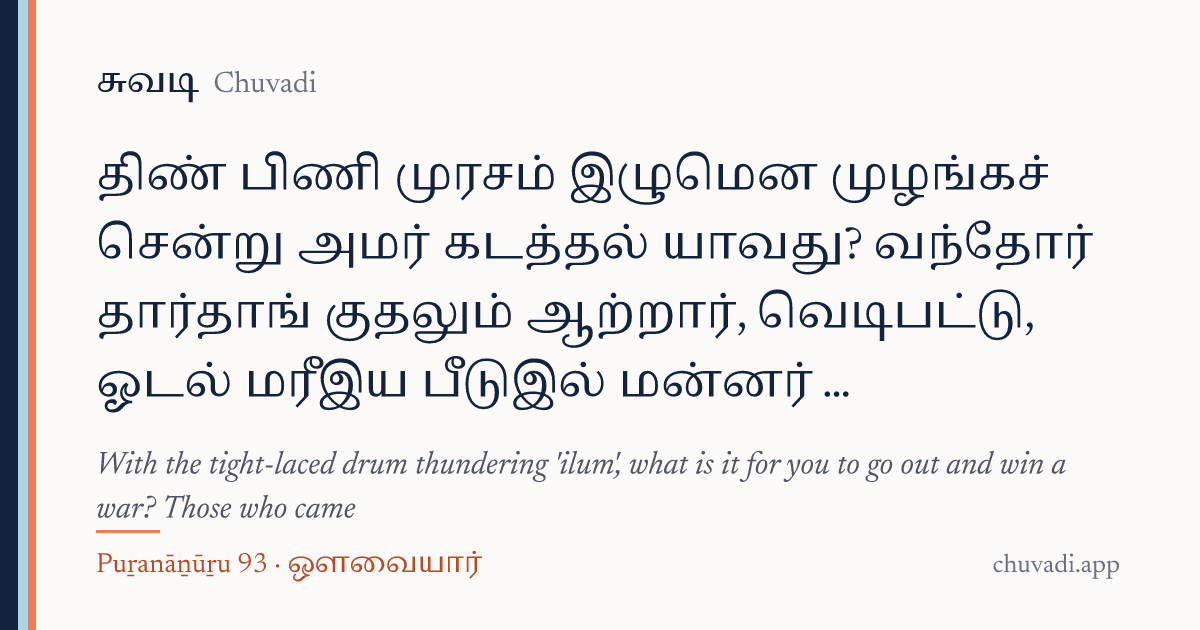
- With the tight-laced drum thundering 'ilum',
- what is it for you to go out and win a war? Those who came
- could not even hold your vanguard; scattering in panic,
- kings without honour, long used to running away,
- when their bodies have perished of sickness, men take them up,
- forgetting their love, and to clear away their fault
- the chiefs of the four Vedas, of a creed devoted to right,
- lay them out on green grass spread with skill:
- 'With valour as your post, where the warriors fell in good battle,
- those of the long anklets, go where they went!' they say,
- and split them with the sword and bury them; even this they have escaped, indeed;
- for the lordly elephant, with musth flowing into its mouth where striped bees hum,
- has fallen and lies on the killing field,
- as you crushed the hard battle till it scattered,
- great one! and took a noble wound.
What the poem says
Auvaiyār sings of Atiyamāṉ Neṭumāṉ Añci after a battle in which he was wounded. The tiṇai is vākai, victory, and the turai arasa vākai is a king's victory.
She opens by saying that winning a war with drums thundering is nothing remarkable for him; his enemies could not even withstand his advance guard and fled. These are 'kings without honour', accustomed to running. Then she describes a custom for such men. When a king dies of illness rather than in battle, his people put love aside, and Vedic priests lay his body on spread darbha grass, cut it with a sword and bury it, saying 'go to the place where heroes who fell in battle have gone', so that the shameful death is ritually made a warrior's death.
The final lines are hard to construe with certainty. One reading is that the cowardly kings have now escaped even this ritual, because they have died, or will die, by the king's hand in real battle, now that he has killed their great elephant and borne a glorious wound. Another reading is that they have escaped death itself because the king was wounded. The translation keeps the literal sequence and does not decide between them.
The word for the wound, viḻuppuṇ, means a 'noble' or 'excellent' wound, received on the front of the body. In line 10 the edition prints nīḻ, read here as nīḷ, 'long'.