



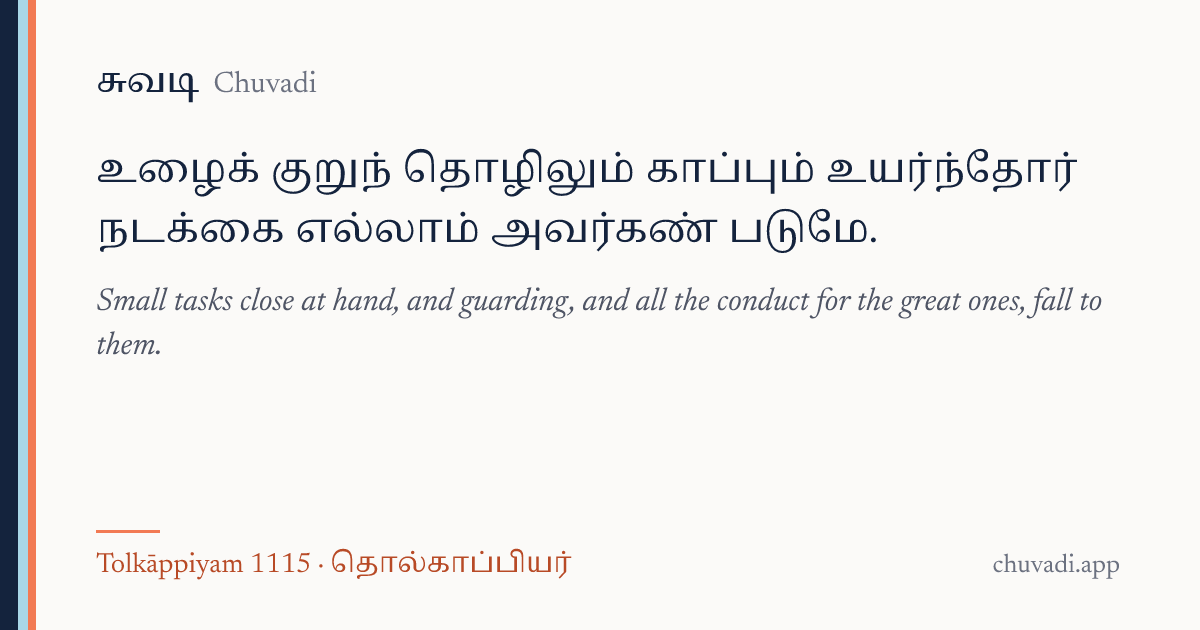
தொல்காப்பியம் 1115 · பொருள் 4.30
பாடல் · The poem
Tap a word to see where else it occurs.
பொருள் · Meaning in TamilAI
அருகில் இருந்து செய்யும் சிறு ஏவல் பணிகளும், காவலும், உயர்ந்தோர்க்கு நாள்தோறும் செய்ய வேண்டிய பணிகள் எல்லாமும் இளையோரைச் சாரும்.
இளம்பூரணர்
இவ்வாறே பொருள் கொள்வார்.
நச்சினார்க்கினியர்
"உயர்ந்தோர்க்கு நடக்கை" எனப் பாடம் கொண்டு, இதை முன் நூற்பாவுக்குப் புறனடை என்று, இவ்விரண்டுக்கும் உரியர் அல்லாத புறத்திணையோர் மேற்கூறியவற்றைக் கூறப்பெறார் என்பார்.
ஆங்கிலம் · English translationAI
Translation
- Small tasks close at hand, and guarding, and all the conduct
- for the great ones, fall to them.
What the poem says
The iḷaiyōr, the young attendants of the previous rule, also do the small services near their masters (uḻaik kuṟuntoḻil), keep guard (kāppu), and carry out all the daily duties owed to the great.
Iḷampūraṇar reads it so, with the examples "in the poems". Nacciṉārkkiṉiyar, reading uyarntōrkku naṭakkai, calls the rule a supplement: these duties belong only to such attendants, and so those of the puṟattiṇai, outside akam, cannot speak the utterances given before. In both, the rule sets the attendants' role in the household.
உரை · Commentary
இளம்பூரணர்
இதுவும் இளையோர்க்குரிய திறன் உணர்த்திற்று.
(இ - ள்.) இடத்தினின்று குற்றேவல் செய்தலும் மெய்காத்தலும் பிறவும் உயர்ந்தோர்க் குளதாகிய நடையெல்லாம் இளையோர்கட்படும் என்றவாறு.
உதாரணம் வந்தவழிக் காண்க.
நச்சினார்க்கினியர்
இது முற்கூறியவற்றிற்கு உரியார் இங்ஙனஞ் சிறந்தாரென மேலதற்கோர் புறனடை.
(இ-ள்) உழைக்குறுந் தொழிலும் காப்பும் உயர்ந்தோர்க்கு நடக்கை எல்லாம் - அவரிடத்து நின்று கூறிய தொழில் செய்தலும் போற்றீடு முதலிய பாதுகாவலும் பிறவும் உயர்ந்தோர்க்குச் செய்யும் தொழிற்பகுதியெல்லாம்; அவர்கட்படும் — முற்கூறிய இளையோரிடத்து உண்டாம் (எ — று).
என இவ்விரண்டிற்குமுரியர் அல்லாத புறத்திணையர் முற்கூறியவை கூறப்பெறாரென்பது பொருளாயிற்று.