



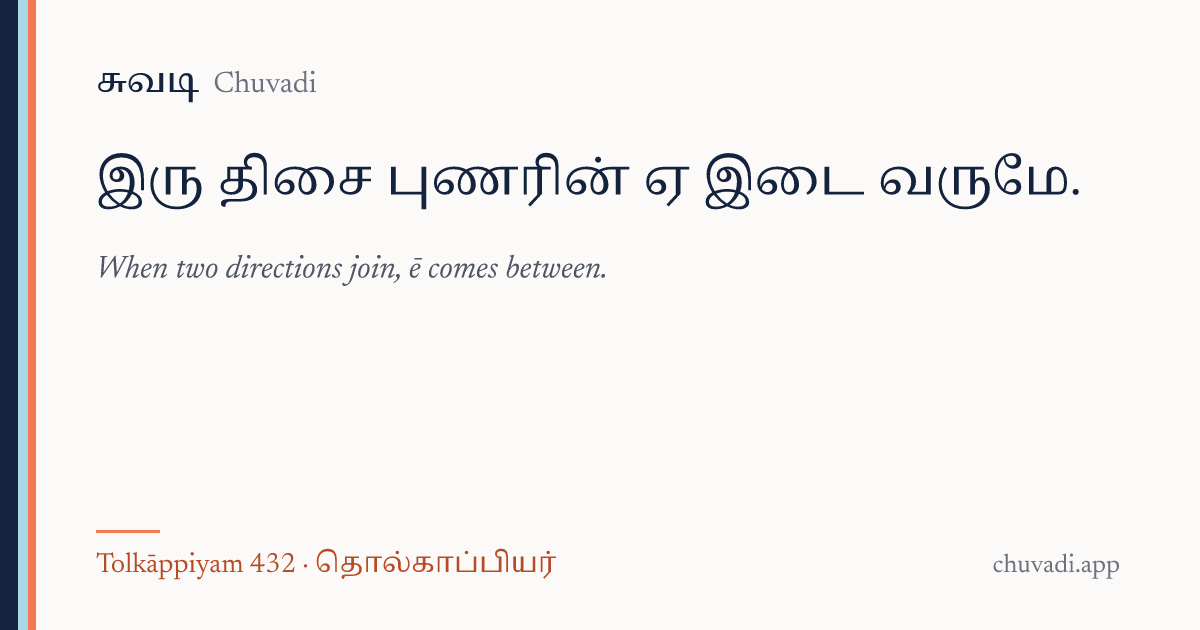
தொல்காப்பியம் 432 · எழுத்து 9.26
பாடல் · The poem
Tap a word to see where else it occurs.
பொருள் · Meaning in TamilAI
இரண்டு பெருந்திசைப் பெயர்கள் ஒன்றோடு ஒன்று புணரும்போது, இடையே ஏ என்னும் சாரியை வரும். தெற்கு என்பதும் வடக்கு என்பதும் சேர்ந்து தெற்கே வடக்கு ஆகிறது; கிழக்கே மேற்கு என்பதும் அப்படியே.
இளம்பூரணர்
இவர் உரையும் இந்நூற்பா இரு பெருந்திசைப் பெயர்கள் புணரும்போது ஏ இடையே வருவதைக் கூறுகிறது எனக் கொண்டு, மேற்கூறிய பொருளையே தருவதாகக் கொள்ளலாம்; இவர் தரும் எடுத்துக்காட்டுகள் இங்கு சரிபார்க்கப்படவில்லை.
நச்சினார்க்கினியர்
இவை உம்மைத்தொகை, அதாவது தெற்கும் வடக்கும் என்று பொருள் என விளக்குகிறார்.
ஆங்கிலம் · English translationAI
Translation
- When two directions join, ē comes between.
What the poem says
When two of the main direction names join in a co-ordinate compound, the augment ē is inserted: teṟku + vaṭakku gives teṟkē vaṭakku "south and north", kiḻakku + mēṟku gives kiḻakkē mēṟku.
Nacciṉārkkiṉiyar explains these as "um-compounds" (ummait tokai), that is, "south and north". He confines the rule to the four principal directions; the intermediate ones are taken up in the next nūṟpā.
உரை · Commentary
நச்சினார்க்கினியர்
இது குற்றுகர ஈற்றுத் திசைப்பெயர்க்கு அல்வழி முடிபு கூறுகின்றது.
(இ-ள்.) இரு திசை புணரின் — இரண்டு பெருந்திசை தம்மிற் புணரின், ஏ இடை வரும் — ஏயென்னுஞ் சாரியை இடை நின்று புணரும்; எ-று.
(எ-டு.) தெற்கே வடக்கு கிழக்கே மேற்கு இவை உம்மைத் தொகை.