



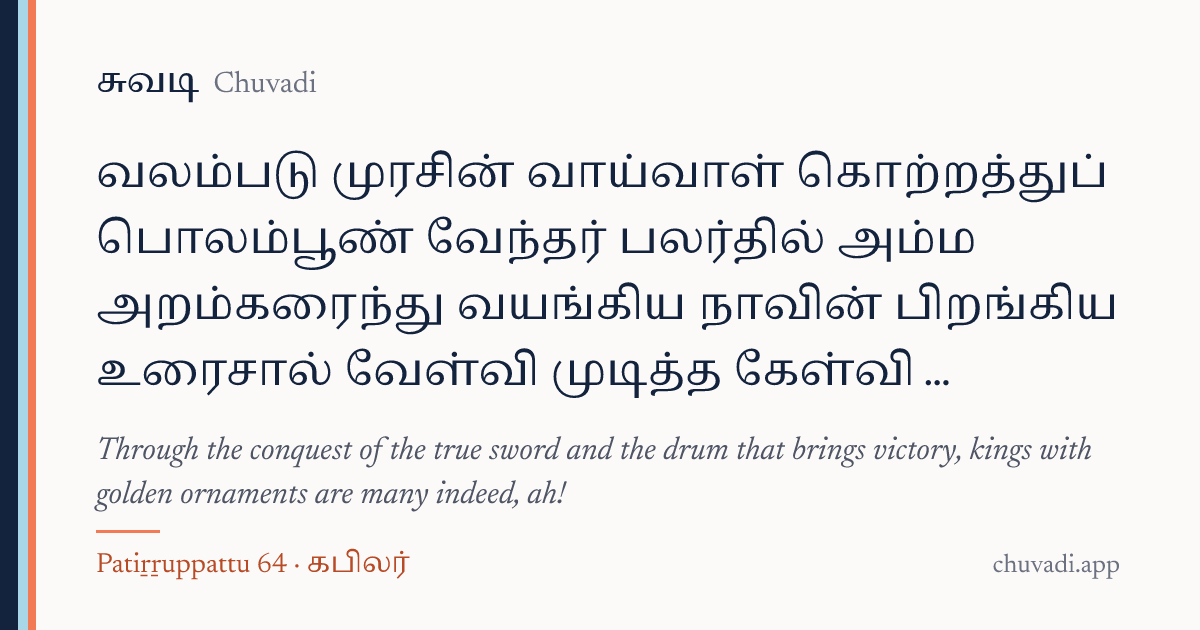
பதிற்றுப்பத்து 64 · ஏழாம் பத்து
பாடல் · The poem
Tap a word to see where else it occurs.
பொருள் · Meaning in TamilAI
வெற்றி தரும் முரசும் தப்பாத வாளும் கொண்ட வெற்றியால் பொன் அணி பூண்ட வேந்தர் பலர் உள்ளனர். ஆனால் நீ அப்படி அல்லன். அறத்தை எடுத்துரைத்து விளங்கும் நாவுடைய, புகழ் பெற்ற வேள்விகளை முடித்த, கேள்வியறிவுடைய அந்தணர், நீர் வார்த்துக் கொடுக்கும் அரிய அணிகலன்களைப் பெற்றுக்கொள்கின்றனர். அதனால் நீர் பட்டுச் சேறாகிய மணல் நிறைந்த முற்றத்தில், களிறுகள் நின்று நின்று சலித்திருக்கும் காவல் மிகுந்த வாயிலின் புறத்தே காத்திருக்கும் வயிரியரைக் கண்டால், உடனே "வாளால் பிடரி கத்தரித்த குதிரைகளையும் அசையும் தேர்களையும் அணிகலன்களோடு கொடுங்கள்" என்று கட்டளையிடுவாய். இதுவே உன் இடையறாத கொள்கை. ஆதலால், கரிய பெரிய வானத்தில் ஞாயிறு தோன்றியதும் பல விண்மீன்களின் ஒளி கெடுவது போல, பகைவரின் பெரும் எதிர்ப்பைச் சிதைத்த உன் வலிய அடியை வாழ்த்தி, உன்னைக் காண வந்தேன், கழலும் தொடியும் அணிந்த தலைவனே! கரிய கழியில் மலர்ந்த நெய்தலின் இதழ் அழகு போன்ற தோற்றமுடைய உயர்ந்த மழைமேகத்தை விடப் பெரும் பயனைப் பொழிகிறாய். ஆதலால் என் சுற்றத்தின் பசியைப் போக்கிக்கொள்ள, புகழ் மிக்க தோன்றலே, உன் பாசறைக்கு வந்தேன்.
துறை: காட்சிவாழ்த்து. கபிலர் பாசறையில் மன்னனைக் கண்டு அவன் கொடையையும் வெற்றியையும் வாழ்த்துகிறார். பெயர் "உரைசால் வேள்வி" (4ஆம் அடி) — புகழ் பெற்ற வேள்வி. ஞாயிற்றின் முன் விண்மீன் ஒளி கெடுதலும், மழையினும் மிக்க கொடையும் முக்கிய உவமைகள்.
ஆங்கிலம் · English translationAI
Translation
- Through the conquest of the true sword and the drum that brings victory,
- kings with golden ornaments are many indeed, ah!
- With tongues that shine in proclaiming dharma, eminent,
- having completed the famed sacrifices, the learned
- Brahmins receiving rare treasures as water is poured,
- in the sand-filled courtyard bathed in deep mire,
- where elephants chafe at standing, with hard-to-breach ranks of defence,
- if you see the musicians waiting outside the gate, at once
- you say, give them horses whose manes are cropped by blades
- and swaying chariots, and adorn them with ornaments;
- such is your unceasing way; therefore, there,
- as in the great dark sky the many stars lose their light
- when the sun rises, so the foes'
- great enmity was shattered by your strong feet; praising them,
- I came to see you, lord of anklets and bracelets!
- Like the neytal that blooms in the dark backwater full of flowers,
- with a look that has the beauty of its petals, high
- more than the rain clouds, you shower great benefit; therefore,
- to rid my hungry kin of their hunger,
- O eminent one of high fame, I came to your war camp.
What the poem says
Kapilar addresses the king on a visit to his war camp. He begins by saying that there are many kings with golden ornaments and victorious swords. This king is different. In his courtyard learned Brahmins who have finished famed sacrifices receive rich gifts, with water poured to seal each gift. And when he sees musicians waiting at his gate, he at once orders horses, chariots and ornaments for them (lines 8-10).
Then comes a simile. As the stars fade from the sky when the sun rises, so the king's enemies lost their strength before him (lines 12-14). The poet says he has come to see the king and praise his strong feet. A second comparison follows: the king pours out more benefit than the high rain clouds, whose dark colour is like the petals of the blue neytal flower in the backwaters (lines 16-18).
The poem's name, "Uraicāl vēḷvi" (line 4), means "the sacrifices worthy of praise", referring to the Brahmins' rites the king supports. The syntax of lines 16-18 is compressed. I read the neytal-petal look as describing the rain clouds.