



பதிற்றுப்பத்து 65 · ஏழாம் பத்து
பாடல் · The poem
Tap a word to see where else it occurs.
பொருள் · Meaning in TamilAI
வெட்டி வீழ்த்தப்பட்ட பிணங்களை இடறியதால் குருதிக் கறை படிந்த குளம்புகளையுடைய, விரைந்து ஓடும் நல்ல குதிரைகளுக்கு விரிந்த தலையாட்டம் சூட்டி, எதிர்த்த பகைவரின் வீரம் அழியும்படி வென்ற, காஞ்சி நிலைக்கு ஏற்ற வீரர்களின் தலைவனே! வில்லாளர்களுக்குக் கவசம் போன்றவனே, உன்னை அடைந்தோரின் செல்வமே! அணிகலன் அணிந்து அழகாக உருண்டு எழும் இளம் முலையும், நுண்ணிய வரிகள் கொண்ட அல்குலும், மலர்ந்த பார்வையும், மூங்கில் போல அழகிய ஒளிரும் முன்கையுடைய பருத்த தோளும், அழகிய தெய்வமும் மதிக்கும் கற்பும், நெடுந்தொலைவு மணக்கும் நறுமண நெற்றியும் உடைய செவ்வணி அணிந்த அரசியின் கணவனே! பாணர்களைக் காப்பவனே, பரிசிலர்களின் செல்வமே, அணிகலன் அணிந்து விளங்கும் புகழ் பெற்ற மார்பனே! உன் காலை மகிழ்ச்சி அவையை இனிதாகக் கண்டோம். இனிய நரம்புகளில் பாலைப் பண்ணை வாசிப்பதில் வல்லவன் அதன் துயர் தரும் பகுதிகளை மாற்றி வேறு பண்ணாக இசைப்பது போல, நிலத்தை மாற்றும் மழையைப் போல, விழாச் சிறப்பும் கள் மகிழ்ச்சியும் கொண்ட உன் செல்வத்தால் நீ எங்களுக்கு அளிக்கிறாய்.
துறை: பரிசிற்றுறைப் பாடாண்பாட்டு. பரிசில் பெற்ற கபிலர் மன்னனின் வீரம், அரசியின் அழகும் கற்பும், கொடை ஆகியவற்றைப் புகழ்கிறார். பெயர் "நாள்மகிழ் இருக்கை" (13ஆம் அடி) — காலையில் மகிழ்ந்து வீற்றிருக்கும் அவை. பாலைப் பண்ணை மாற்றும் இசைஞன் உவமை சிறப்பானது.
ஆங்கிலம் · English translationAI
Translation
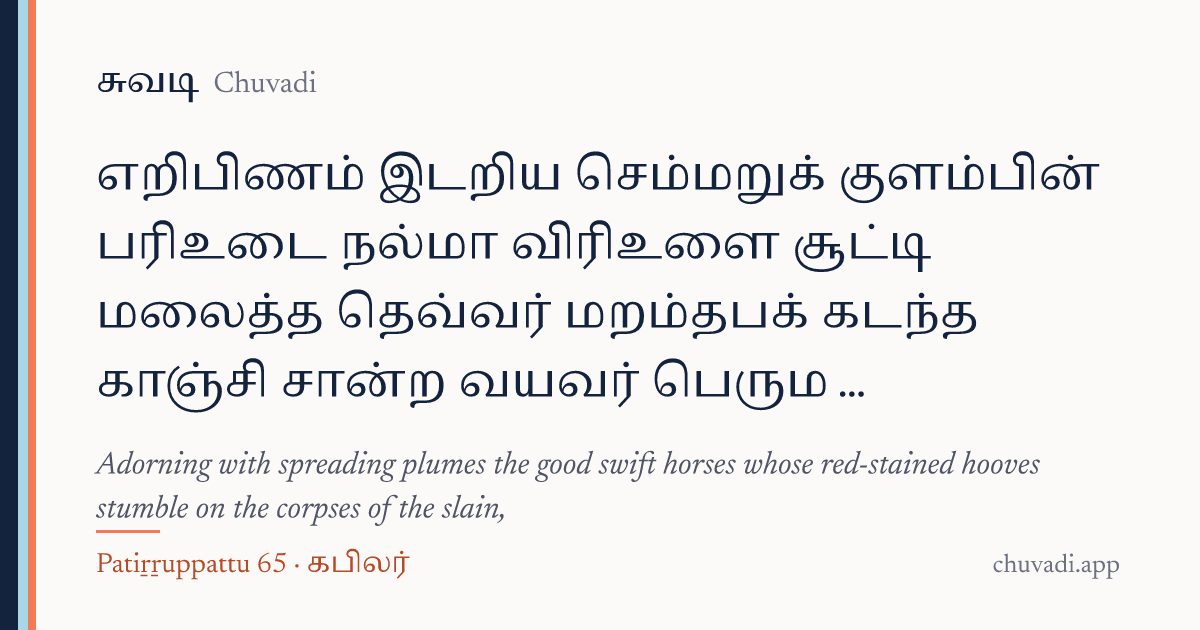
- Adorning with spreading plumes the good swift horses
- whose red-stained hooves stumble on the corpses of the slain,
- you crushed the foes who opposed you so that their valour perished,
- lord of warriors full of steadfast courage!
- Shield of the bowmen, wealth of those who come to you!
- Young breasts, ornamented, lovely, shaped and swelling,
- waist with fine lines, wide-open eyes,
- broad shoulders with bright wrists, beautiful like bamboo,
- with a chastity that commands even the lovely god,
- husband of the red-jewelled woman with a fragrant forehead whose scent goes far!
- Patron of bards, treasure of gift-seekers,
- you of the famous chest that shines with ornaments! Your
- morning assembly of joy we have seen, and sweetly.
- As one skilled in the pālai mode on sweetly strung strings
- changes the tune away from its parts of sorrow,
- so you give, like rain that transforms the land,
- in your toddy-filled joy and festive splendour.
What the poem says
Kapilar addresses the king as a gift-seeker who has been received at court. The poem moves through a chain of titles. First the warrior: his horses' hooves are red from trampling corpses, and his men are full of kāñci, steady courage. Then the protector: "shield of the bowmen, wealth of those who come to you" (line 5). Then the husband, with a full portrait of the queen's beauty and her chastity, which "commands even the lovely god" (line 9). Last comes the patron of bards and gift-seekers.
The poet says he has seen the king's "nāḷ makiḻ irukkai" (line 13), the morning assembly where the king sits in good cheer and gives gifts. This phrase gives the poem its name. The closing simile comes from music. A player skilled in the pālai mode can turn its sorrowful parts into a happier tune, and the comparison seems to say that the king's giving likewise changes the bards' poverty into joy, like rain that changes dry land (lines 14-16).
Line 9 is open to more than one reading. "Kāmar kaṭavuḷ" may mean the gods in general or a particular god.