



பதிற்றுப்பத்து 66 · ஏழாம் பத்து
பாடல் · The poem
Tap a word to see where else it occurs.
பொருள் · Meaning in TamilAI
வளைந்த பெரிய தண்டும், இனிமையாகக் கனிந்த நரம்புத் தொடையும் கொண்ட இடமகன்ற பேரியாழில் பாலைப் பண்ணை இசைத்துக்கொண்டு அலைந்து செல்லும் அறிவுமிக்க இரவலனே! இடி போல முழங்கும் முரசுடன், சொன்ன ஒரு சொல் தவறாமல், பகைவரின் வேல் தாங்கிய கூட்டப் போரைச் சிதைத்து அழித்து, கொன்று புறமுதுகு கண்ட, பிணங்கள் நிறைந்த போர்க்களத்தில், தொன்றுதொட்டு வந்த திறையாகப் பெற்ற களிறுகளோடும், அம்பணம் என்னும் அளவையால் அளந்த, அளவு கடந்து பெருகிய நெல்லோடும் நிறைவான உணவை அவன் தருவான் என்று சொல்வர். சினந்த பகைவரின் பெரும் எதிர்ப்பைத் தாங்கிய, உடைக்க முடியாத தூசிப்படையுடைய, காலை மேகம் தவழும் மலைச்சிகரங்கள் போலத் தோன்றும் தலைவன் அவன். கேடயங்களுக்கு மேல் எழுந்து விரிந்து ஒளிரும் வேல்களும், மாலை முறுக்கியது போன்ற வாள்களும் கொண்ட போர் விழாவில், வீரர்கள் பனந்தோட்டோடு சேர்த்துக் கட்டிய தெய்வத் தன்மையுடைய வாகையின் பஞ்சு போன்ற பூவைப் போல, பூத்த முல்லைப் புதரைச் சுற்றும் பறவைகள் காட்டு வழியில் பிடவின் பூங்கொத்துகளில் தங்கும். வெண்பளிங்கு கலந்த செம்பரல் நிறைந்த மேட்டு நிலத்தில் ஒளிரும் கதிருடைய நல்ல மணிகளைப் பெறும் அகன்ற இடங்களையுடைய நாட்டின் தலைவன் அவன்.
துறை: செந்துறைப் பாடாண்பாட்டு; கபிலர் ஓர் இரவலனை மன்னனிடம் செல்லுமாறு கூறுகிறார். பெயர் "புதல்சூழ் பறவை" (16ஆம் அடி) — புதரைச் சூழ்ந்து பறக்கும் பறவை. 13-17ஆம் அடிகளின் உவமைத் தொடர்பு முழுதும் தெளிவில்லை.
ஆங்கிலம் · English translationAI
Translation
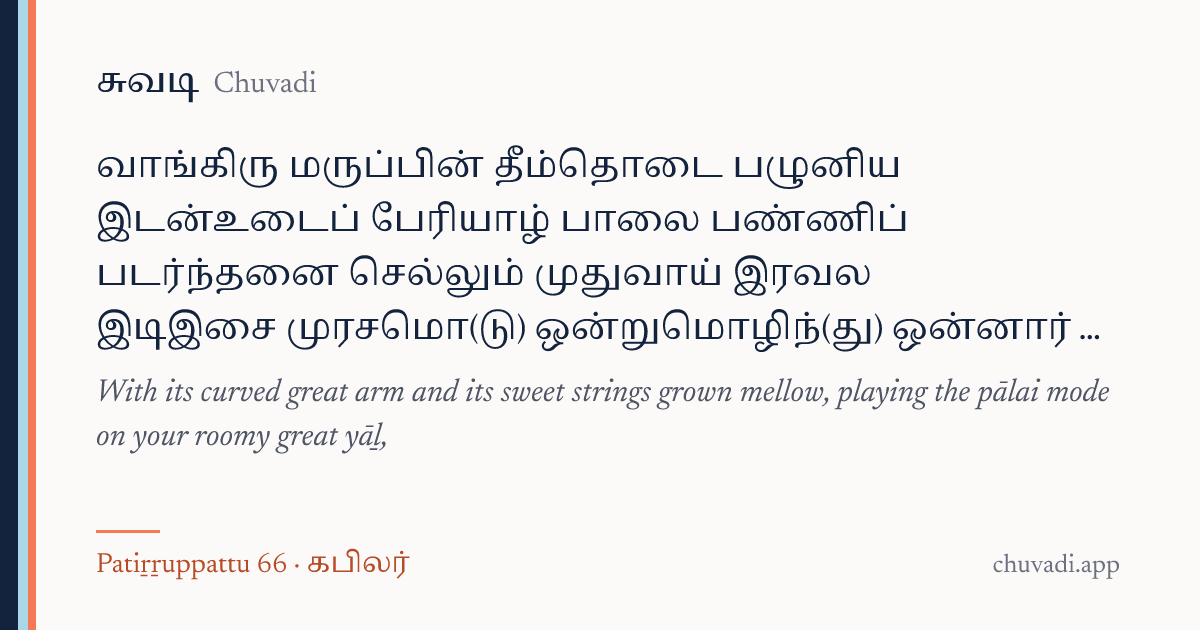
- With its curved great arm and its sweet strings grown mellow,
- playing the pālai mode on your roomy great yāḻ,
- you who go wandering, wise-voiced suppliant!
- With drums of thundering sound, keeping to his single word, the foes'
- spear-bearing massed battle he scattered and crushed,
- killed them and saw their backs, in the corpse-crowded battlefield;
- with elephants given as ancient tribute, and with paddy
- measured in the ampaṇam measure, spreading beyond all reckoning,
- he gives abundant food, they say. Of those who were enraged
- he withstood the great hostility, with his hard-to-breach vanguard,
- the eminent one who looks like the massed peaks under morning clouds,
- with spreading, shining spears rising above the shields,
- in a festival of swords like twisted garlands,
- where warriors who fight in battle have bound palmyra leaves
- with the fluffy flowers of the divine vākai; like those,
- the birds that circle the bushes of flowering mullai
- rest on the bunched clusters of piṭavam in the forest tracts;
- on the gravel ground of red pebbles mixed with white crystal
- people find fine gems with shining rays:
- he is the lord of that land of wide spaces.
What the poem says
This is a guiding poem: Kapilar speaks to a wandering bard with a great yāḻ (harp) and points him toward the king. Go to him, the poet says, because he gives food in abundance. He measures out paddy by the ampaṇam measure and gives elephants received as ancient tribute (lines 7-9).
In between, the poem praises the king as a fighter who keeps his word. With thundering drums he scattered the massed spears of his enemies and saw their backs as they fled. His army looks like mountain peaks under morning clouds, with spears rising above the shields.
The last part describes his land in one long, linked image. The warriors' festival of swords, with palmyra leaves and white vākai flowers bound together, is compared to birds circling mullai bushes and resting on piṭavam clusters in the forest. In that land the red gravel, mixed with white crystal, yields shining gems. The poem's name, "Putalcūḻ paṟavai" (line 16), means "the birds that circle the bushes". The comparison in lines 13-17 is dense, and the exact link between the warriors' garlands and the birds is my reading.