



பதிற்றுப்பத்து 67 · ஏழாம் பத்து
பாடல் · The poem
Tap a word to see where else it occurs.
பொருள் · Meaning in TamilAI
கொடுமணம் என்னும் ஊருக்குச் சென்று வந்த, பெருமிதச் சொல்லுடைய சுற்றத்தோடு, பந்தர் என்ற பெயருடைய பெரும் புகழ் கொண்ட பழைய ஊருக்கும் சென்ற, கடமை அறிந்த மரபுடைய திறமையான பாணனே! தெளிந்த கடலின் முத்துகளோடு நல்ல அணிகலன்களும் பெறுவாய் — நீ சென்று அவனைப் பாடினால். அவன் யார் என்றால்: கொல்லும் படைகள் தெரியவும், வெற்றிக்கொடி அசையவும், ஒளிரும் கொம்பும் வலம்புரிச் சங்கும் முழங்கவும், பல களிற்றுக் கூட்டங்கள் வரிசையாகப் பகைநாட்டுக்குச் செல்லவும், போர்க்களத்தில் பரந்த ஒளிரும் கொழுப்பின் மேல் கூட்டச் சிறகுடைய கழுகுகள் குருதியை நிறைய உண்ணவும், தலை வெட்டப்பட்டு எஞ்சிய உடல்களோடு வாள் நிறைந்த தூண்களும், உருவமற்ற பேய்மகள் அச்சத்தை மேலும் அதிகரிக்கவும், நாடுகள் எல்லாம் நடுங்கப் பல போர்களில் கொன்றவன். மணமுள்ள கொன்றைக் கொத்தும் வெண்மையான பனந்தோடும் சேர்ந்த கண்ணி அணிந்தவர், வாள் முனை பதிந்த வரிகள் கொண்ட உடலினர், முறுக்கிய கொம்பும் கரிய கண்ணும் உடைய காளையோடு வளைந்த தலை விலங்குகளையும் வைத்திருக்கும் கரிய கசாப்புக்காரர்களின் கத்தி ஆடும் அடிமரம் போல உடல் சிதைந்தவர், சந்தனம் அழகை மறைத்த சான்றோர் ஆகியோரின் பெருமகன் அவன். மலர்ந்த காந்தளில் ஓயாது ஊதிய விரைந்த சிறகுடைய தும்பி, அச்சம் தரும் தெய்வத்தின் பூவை விரும்பிப் பரவி, சிறகின் இசை அழியும் புகழ்மிக்க உயர்ந்த மலையாகிய, கல் உயர்ந்த நேரி மலையின் வீரன், செல்வக் கோமான் அவன்.
துறை: பாணாற்றுப்படை. கபிலர் ஒரு பாணனை வாழியாதனிடம் ஆற்றுப்படுத்துகிறார். பெயர் "வெண்போழ்க் கண்ணி" (13ஆம் அடி) — வெள்ளைப் பனந்தோட்டு மாலை. 16, 20-21ஆம் அடிகளின் பொருள் தெளிவில்லை.
ஆங்கிலம் · English translationAI
Translation
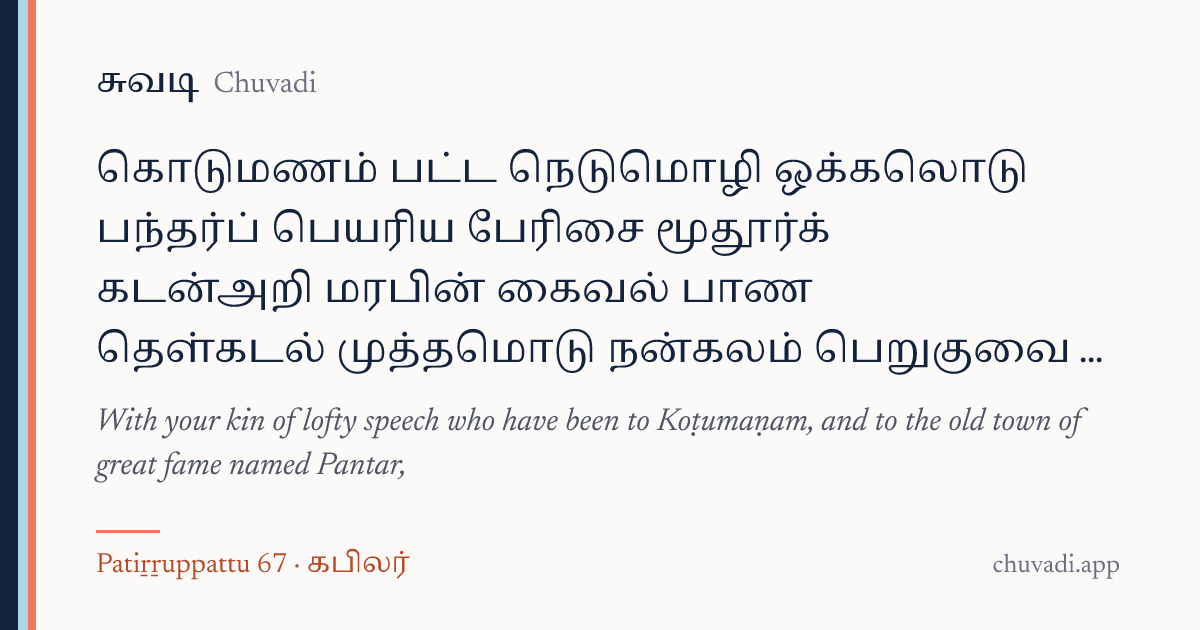
- With your kin of lofty speech who have been to Koṭumaṇam,
- and to the old town of great fame named Pantar,
- skilled bard, of a line that knows its duty,
- you will receive pearls of the clear sea and fine jewels
- if, with his killing weapons on display and his victory flags waving,
- bright-rayed horns and right-whorled conches roaring,
- herds of many elephants in rows moving into foreign lands,
- on the spread of gleaming fat laid out in battle,
- vultures of massed wings feeding to the full on blood,
- with sacrificial posts thick with swords, bodies left when heads were cut off,
- the formless demoness making the anxious ones more anxious,
- he killed in many battles, so that whole lands trembled together;
- of the warriors who wear white palmyra strips with fragrant clustered konrai,
- whose finely lined bodies are marked by the faces of swords,
- with dark-eyed bulls with twisted horns,
- the dark-skinned butchers who keep curve-headed beasts,
- their bodies scarred like the chopping block where the knife plays,
- sandal paste covering their beauty, the great lord of those noble men,
- where the bee that ceaselessly sipped the blooming kāntaḷ,
- the swift-winged tumpi, spreading in its desire for what the fearsome god owns,
- loses the music of its wings, on the tall peak full of fame,
- the warrior lord of high-rocked Nēri,
- the lord of wealth: if you go and sing of him.
What the poem says
This is a bāṇāṟṟuppaṭai, a poem in which one bard guides another to a generous patron. Kapilar tells a skilled bard that if he sings of the king, he will receive pearls of the clear sea and fine jewels (line 4). The poem's last line completes the condition: "if you go and sing of him". The bard's kin have been to Koṭumaṇam and to the famous old town of Pantar. Both places were known for gems and pearls. The reading of lines 1-2 is uncertain: they may instead say that the jewels and pearls come from these towns.
The long middle section shows the king's battles in harsh images. His armies march with flags, horns and conches. Vultures feed on blood and fat. Headless bodies remain near posts thick with swords, and a demoness wanders. His warriors wear white palmyra strips and konrai flowers, which give the poem its name, "Veṇpōḻk kaṇṇi" (line 13), "the garland of white palmyra strips". Their bodies are so scarred by swords that they look like a butcher's chopping block (lines 15-17), and sandal paste covers their beauty.
The king is lord of Nēri, a high, rocky mountain. There a bee that keeps sipping the kāntaḷ flowers, drawn by a desire linked to a fearsome god (line 20), loses the music of its wings. Lines 16 and 20-21 are obscure. The details of the butchers' animals, and why the bee falls silent, are uncertain. Line 18 has "caṉṟōr", which I read as cāṉṟōr, "noble men".