



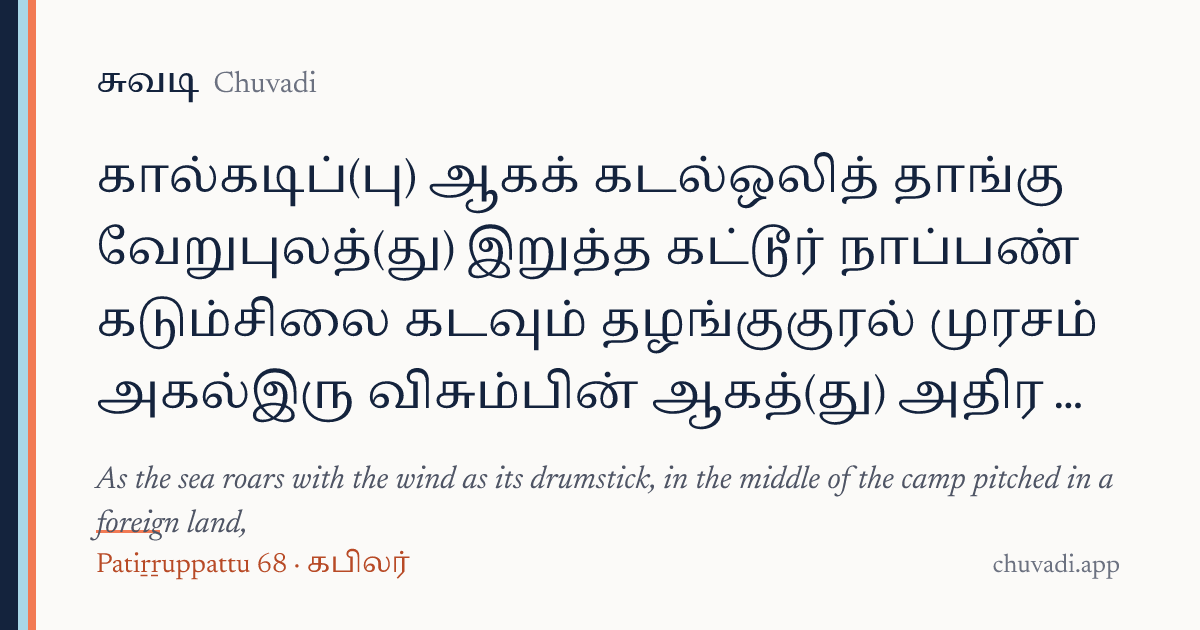
பதிற்றுப்பத்து 68 · ஏழாம் பத்து
பாடல் · The poem
Tap a word to see where else it occurs.
பொருள் · Meaning in TamilAI
காற்றே குறுந்தடியாகக் கடல் ஒலிப்பது போல, பகைநாட்டில் அமைத்த பாசறையின் நடுவே, கடிய வில்லாளரை ஏவும் முழங்கும் ஒலியுடைய முரசு அகன்ற பெரிய வானத்தின் நடுவில் அதிர்கிறது. கடிய அரண் வரிகள் நிலைபெற்ற கோட்டையை அழித்தால் அன்றி உண்ணமாட்டோம் என்று தள்ளிப்போட்ட பல பொழுதுகள் கழிந்தன. நெஞ்சில் விருப்பமும் ஊக்கமும் உடையவர், உடல் தளரும் வருத்தத்தில் இருப்பவர் உன் வீரர். பகைவரின் இருப்பிடங்களைப் பெற்றால், வேந்தன் ஊர்ந்த யானையின் வெண் தந்தங்களை எடுத்துக்கொண்டு, கள்ளுக்கொடி அசையும் கடைத்தெருவில் ஒன்றாகப் புகுந்து, அரிய கள்ளின் விலையைக் கொடுத்த பின் மகிழ்ச்சி மிகுந்து, அச்சம் அறியாத காப்பான வாழ்க்கையை, வடநாட்டில் வாழ்வோரை விடப் பெரிதும் மகிழ்ந்து, ஒவ்வொரு இரவும் இனிய நகை பொருந்திய பல இன்பங்களைப் பெறுவார்களோ? அதே நேரத்தில், உயர்ந்த மண் மதில் சூழ்ந்த நீண்ட நகரில், படுக்கையில் உறக்கம் இல்லாமையால் பசிய அணிகலன்கள் நெகிழ, ஓவியம் போன்ற நீண்ட சுவரில் பல நாட்களைக் கோடிட்டு எண்ணியதால் சிவந்த விரல்கள் மேலும் சிவந்த, அழகிய வரியுடைய குடைச்சூல் அணிந்த, அச்சம் தரும் அழகுடைய மகளிரைப் பிணிக்கும் மணம் கமழும் மார்பனே, இவர்கள் உன் அடிநிழலில் வாழ்வோர்.
துறை: செந்துறைப் பாடாண்பாட்டு. கபிலர் மன்னனின் வீரர்களின் உறுதியையும், வெற்றிக்குப் பின் அவர்கள் பெறும் இன்ப வாழ்வையும், வீட்டில் காத்திருக்கும் மகளிரின் பிரிவுத் துயரையும் கூறுகிறார். பெயர் "ஏம வாழ்க்கை" (12ஆம் அடி) — அச்சமற்ற காப்பான வாழ்க்கை. 14-20ஆம் அடிகளின் தொடர்பு தெளிவில்லை.
ஆங்கிலம் · English translationAI
Translation
- As the sea roars with the wind as its drumstick,
- in the middle of the camp pitched in a foreign land,
- the roaring drum that urges on the fierce bows
- thunders in the breast of the wide, vast sky;
- unless they have stormed the fortress set with fierce lines of defence,
- they will not eat, and many such postponed days have passed;
- men of eager hearts and zeal, in distress that shakes their bodies,
- unless they win the dwellings of their foes,
- then, taking the white tusks of the elephants the king rides,
- they enter together the market where toddy flags wave,
- and after paying the price of rare toddy, their joy at its height,
- a life of safety that knows no fear,
- more contented than those who live in the northern land, every night
- will they gain the many favours of sweet laughter?
- While, for want of a bed, the fresh ornaments slip loose,
- in the long town enclosed by tall mud walls,
- drawing many days on the tall walls that rival paintings,
- their red fingers reddened further, with lovely lined hollow anklets,
- the women of fearsome beauty, whom you bind to you,
- O fragrant-chested one, those who live in the shade of your feet.
What the poem says
Kapilar speaks to the king about his soldiers. The scene is a camp in enemy territory, where the war drum roars like the sea struck by the wind. The warriors have vowed not to eat until they storm the fort (lines 5-6). They are eager at heart, though their bodies are worn out.
The poet then imagines their reward. When they win, they will take the white tusks of the king's captured elephants to the market, where flags mark the toddy shops. They will buy rare toddy and live a carefree life, happier than the blessed people of the northern land of legend (line 13). Line 14 is a question: will they gain such delights?
The last lines turn to women at home, held by the king's fragrant chest (lines 19-20). They cannot sleep, so their bangles slip loose as they grow thin. They count the days of absence by drawing lines on the painted walls until their red fingers grow redder. The poem's name, "Ēma vāḻkkai" (line 12), means "a life of safety". The phrase "nāmam aṟiyā", "knowing no fear", comes just before it. The syntax of lines 14-20 is compressed, and the link between the women and "those in the shade of your feet" is my reading. "Kuṭaiccūl" in line 18 I take as hollow anklets.