



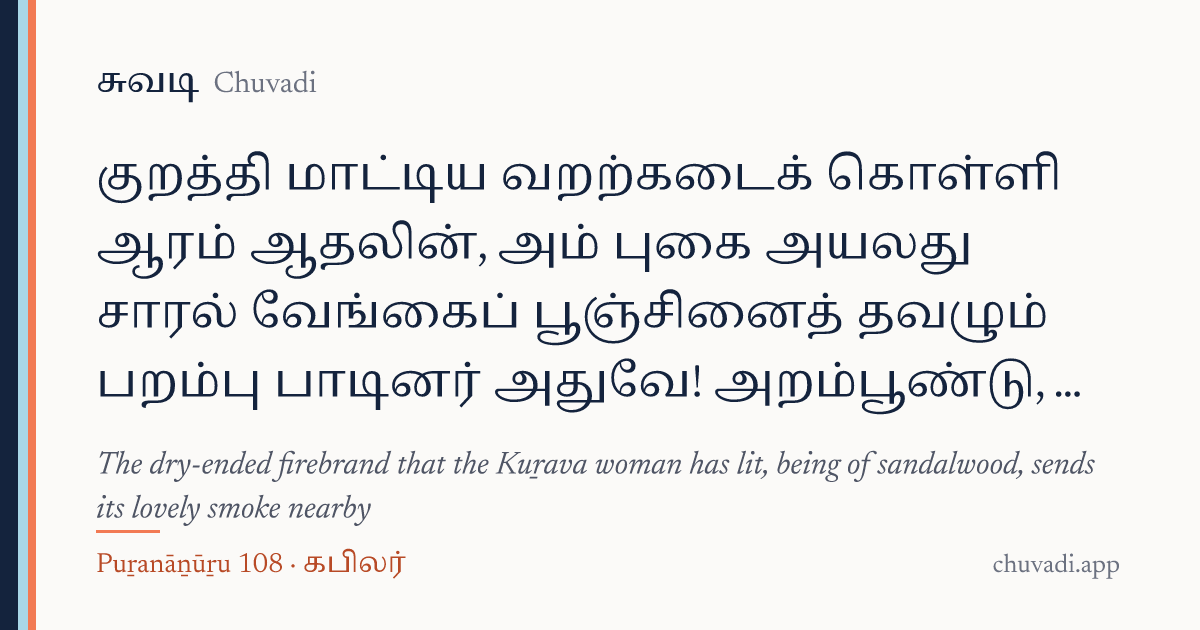
புறநானூறு 108
பாடல் · The poem
Tap a word to see where else it occurs.
பொருள் · Meaning in TamilAI
குறத்தி தன் வீட்டு வாயிலில் எரிய வைத்த, நுனி உலர்ந்த கொள்ளிக்கட்டை சந்தன மரமாக இருப்பதால், அதன் அழகிய நறுமணப் புகை அருகிலுள்ள மலைச்சரிவின் வேங்கை மரத்தின் பூத்த கிளைகளின் மேல் தவழ்ந்து செல்லும். அத்தகைய பறம்பு மலை பாடும் புலவர்களுக்கே உரியதாகிவிட்டது! அறநெறியைப் போற்றும் பாரியும், இரவலர்கள் தன்னையே கேட்டாலும் 'வரமாட்டேன்' என்று சொல்ல மாட்டான்; அவன் அவர்களுக்கு உரியவனாகவே இருக்கிறான்.
இது பாடாண் திணை; துறை இயன்மொழி. பாடியவர் கபிலர்; பாடப்பட்டோன் வேள் பாரி. விறகுக்குக் கூடச் சந்தனம் பயன்படும் அளவுக்குப் பறம்பு மலை வளமுடையது என்பது கருத்து. 'அவர் வரை அன்னே' என்ற இறுதித் தொடரின் பொருள் உறுதியாகத் தெரியவில்லை; அவர்களின் எல்லைக்குள் உள்ளவன் என்றும், அவர்களுக்கு மலை போன்ற அரண் என்றும் கொள்ளலாம்.
ஆங்கிலம் · English translationAI
Translation
- The dry-ended firebrand that the Kuṟava woman has lit,
- being of sandalwood, sends its lovely smoke nearby
- to creep over the flowering branches of the vēṅkai on the slope:
- that Paṟampu belongs to the singers! Holding to right,
- Pāri too, if the suppliants ask for him,
- will not say 'I will not come'; he lies within their bounds.
What the poem says
Kapilar praises Vēḷ Pāri and his hill, Paṟampu (tiṇai pāṭāṇ, praise of a patron; turai iyaṉmoḻi, his natural qualities).
The first three lines describe the hill. A woman of the Kuṟavar, the hill people, has kindled a firebrand at her door; the wood happens to be sandalwood, so the smoke that drifts from it is fragrant and creeps over the flowering vēṅkai trees on the slope. Even the ordinary firewood of Paṟampu is sandal, so rich is the hill.
Then Kapilar makes two claims. Paṟampu already belongs to those who sing; it has, in effect, been given to the poets. And Pāri himself, true to the right way, would not refuse even if suppliants asked for him, his own person: he would go with them, as one who is theirs.
The last line, avar varai aṉṉē, is taken to mean 'he is within their bounds, theirs to claim'; it could also be read as 'he is like a mountain for them', a support, and the exact sense is not certain.