



புறநானூறு 109
பாடல் · The poem
Tap a word to see where else it occurs.
பொருள் · Meaning in TamilAI
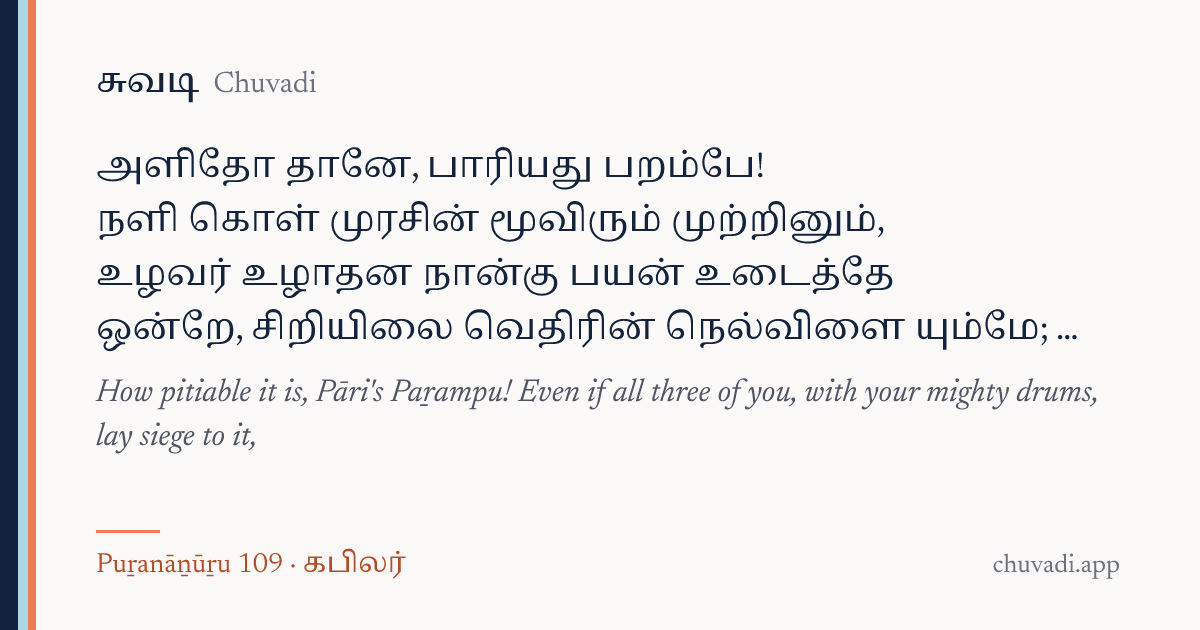
பாரியின் பறம்பு மலை இரங்கத்தக்கது அல்லவா! பெருமை மிக்க முரசுகளையுடைய மூவேந்தர்களாகிய நீங்கள் மூவரும் ஒன்றுசேர்ந்து முற்றுகையிட்டாலும், உழவர்கள் உழாமலேயே விளையும் நான்கு வகை விளைச்சல்கள் அதற்கு உண்டு. ஒன்று, சிறிய இலைகளையுடைய மூங்கிலில் நெல் விளையும். இரண்டு, இனிய சுளைகளையுடைய பலா மரத்தில் பழங்கள் பழுக்கும். மூன்று, செழித்த கொடியுடைய வள்ளிக்கிழங்கு மண்ணுக்குள் இறங்கி வளரும். நான்கு, அழகிய நிறமுடைய தேனீக்கள் பாய்ந்து அமைத்த தேன்கூடுகள் மேலிருந்து நிரம்பி வழிவதால், செறிந்த உயர்ந்த மலை தேனைப் பொழியும். அதன் மலைகள் வானம் போல அகன்றவை; அதன் சுனைகள் வானத்து விண்மீன்கள் போலப் பலவாக உள்ளன. அங்கே, ஒவ்வொரு மரத்திலும் கட்டிய யானைகளை உடையவர்களாக இருந்தாலும், ஒவ்வொரு நிலத்திலும் பரப்பிய தேர்களை உடையவர்களாக இருந்தாலும், உங்கள் முயற்சியால் அதைக் கைப்பற்ற முடியாது; வாளுக்கு அஞ்சி அவன் அதைத் தரமாட்டான். அதைப் பெறும் வழியை நான் அறிவேன். முறுக்கிய நரம்புகளையுடைய சிறிய யாழை இசைத்துக்கொண்டு, நறுமணக் கூந்தலையுடைய உங்கள் விறலியர் பின்னால் வர, ஆடிக்கொண்டும் பாடிக்கொண்டும் நீங்கள் சென்றால், அவன் நாட்டையும் மலையையும் ஒருசேர உங்களுக்குக் கொடுத்துவிடுவான்.
இது நொச்சித் திணை, முற்றுகையிடப்பட்ட அரணைக் காப்பதைப் பாடுவது; துறை மகண் மறுத்தல், அதாவது மகளை மணம் செய்து கொடுக்க மறுத்தல். ஆனால் பாடலில் மகளைப் பற்றிய குறிப்பு எதுவும் இல்லை. பாடியவர் கபிலர்; பாடப்பட்டோன் வேள் பாரி. 'ஓரி' என்பதைத் தேனீ அல்லது தேன்கூடு எனக் கொண்டோம்; அதன் பொருள் உறுதியாகத் தெரியவில்லை. ஆறாம் அடியில் 'லீழ்க்கும்மே' என அச்சில் இருப்பதை 'வீழ்க்கும்மே' எனக் கொண்டோம்.
ஆங்கிலம் · English translationAI
Translation
- How pitiable it is, Pāri's Paṟampu!
- Even if all three of you, with your mighty drums, lay siege to it,
- it has four kinds of yield that ploughmen do not plough:
- one, the small-leaved bamboo ripens its rice;
- two, the jackfruit with its sweet pods ripens its fruit;
- three, the thick-vined vaḷḷi sends down its tubers;
- four, as the lovely-coloured ōri settles there and overflows from above,
- the dense, tall hill pours out honey.
- Its hills are wide as the sky; like the sky's
- stars are its springs; there,
- even if you have tuskers tied to every tree,
- even if you have chariots spread over every field,
- you will not take it by effort; he will not give it at the sword;
- I know the way to take it:
- tuning the small lute with strings of twisted gut,
- with your viṟalis of fragrant hair following behind,
- if you go dancing and singing,
- he will give you both country and hill at once.
What the poem says
Kapilar addresses the three crowned kings, 'all three of you with your mighty drums', who are besieging Paṟampu, the hill of his patron Vēḷ Pāri. The tiṇai is nocci, the defence of a besieged fortress. The turai makaṇ maṟuttal means 'refusing to give a daughter in marriage'; the poem itself says nothing about daughters, and the label presumably reflects a reason for the siege known to the compilers, which the text does not state.
The poem opens with mock pity: how pitiable Paṟampu is! Then it shows why the siege cannot succeed. The hill feeds itself without any ploughing, from four sources: rice from the flowering bamboo, jackfruit, the tubers of the vaḷḷi vine, and honey that streams down the hill from the hives. Its slopes are as broad as the sky and its springs as many as the stars. No number of elephants tied to the trees or chariots spread across the land will take it by force, and Pāri will not hand it over at sword-point.
Kapilar then offers, with irony, the one method that will work. Let the kings come as bards: tuning small lutes, with their viṟalis walking behind, singing and dancing. Then Pāri, who never refuses a suppliant, will give them the whole country and the hill together.
In line 7, ōri is taken as a kind of honeybee or its comb; the word is not certain. In line 6 the edition prints līḻkkummē, read here as vīḻkkummē, 'sends down'.