



புறநானூறு 110
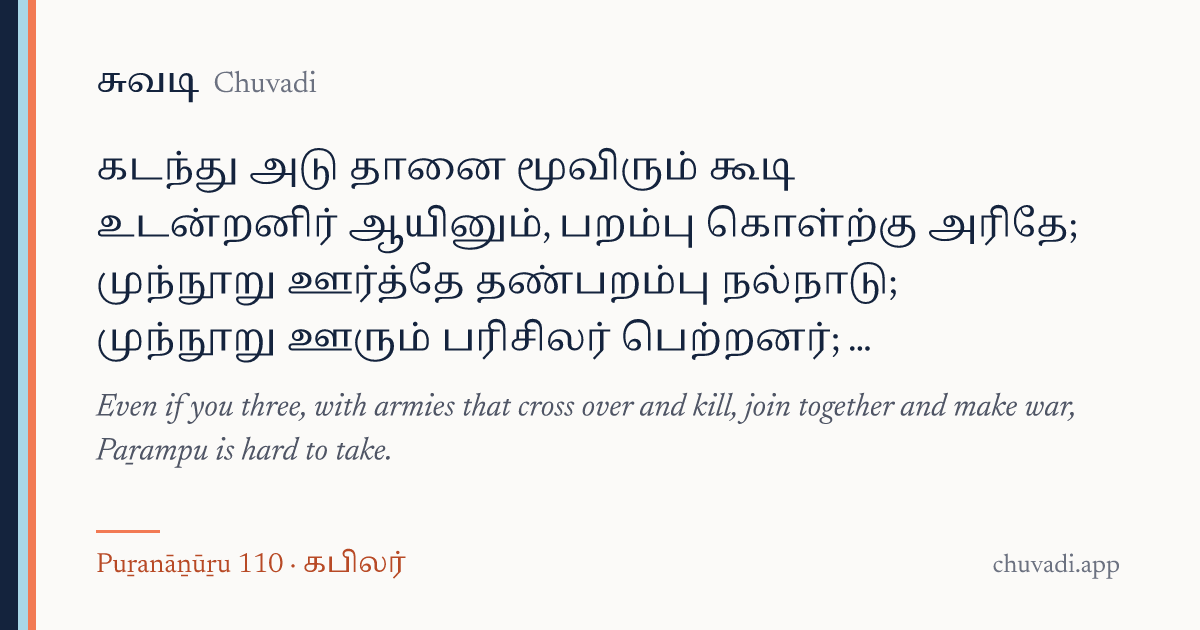
பாடல் · The poem
Tap a word to see where else it occurs.
பொருள் · Meaning in TamilAI
மூவேந்தர்களே! எதிர்ப்பவரைக் கடந்து சென்று கொல்லும் படைகளோடு நீங்கள் மூவரும் ஒன்றுகூடிப் போர் செய்தாலும், பறம்பு மலையைக் கைப்பற்றுவது அரிது. குளிர்ந்த பறம்பு என்னும் நல்ல நாடு முந்நூறு ஊர்களை உடையது; அந்த முந்நூறு ஊர்களையும் பரிசிலர்கள் ஏற்கெனவே பெற்றுவிட்டனர். இப்போது இங்கே நானும் பாரியும்தான் இருக்கிறோம்; இந்த மலையும் இருக்கிறது. நீங்கள் பாடிக்கொண்டு இரவலராக வந்தால், அதையும் பெற்றுச் செல்லலாம்.
இது நொச்சித் திணை; முற்றுகையிடப்பட்ட அரணைக் காப்பது பற்றியது. துறை மகள் மறுத்தல்; அதாவது வேந்தன் மகளைக் கேட்டபோது மறுப்பது. ஆனால் பாடலில் மகளைப் பற்றி எதுவும் இல்லை; இத்துறை ஒரு மரபுச் செய்தியைச் சார்ந்தது போலும். பாடியவர் கபிலர்; பாடப்பட்டவன் வேள் பாரி. இரண்டாம் அடியில் உள்ள 'கொள்ற்கு' என்பது 'கொளற்கு' என்பதன் அச்சுப் பிழை.
ஆங்கிலம் · English translationAI
Translation
- Even if you three, with armies that cross over and kill, join together
- and make war, Paṟampu is hard to take.
- Three hundred villages has cool Paṟampu, the good land;
- the three hundred villages the suppliants have already received.
- We remain, Pāri and I;
- the hill remains too — if you come singing, you may go with it.
What the poem says
Kapilar, the poet and close companion of the chieftain Pāri, speaks to the three crowned kings who have joined forces to besiege Pāri's hill-country, Paṟampu. He tells them that force will never take it. The land had three hundred villages, but Pāri has already given every one of them to bards and suppliants; all that is left is Pāri, the poet himself, and the hill. If the kings want it, they must come as suppliants do, singing, and they will be given it.
The tiṇai is nocci, the defence of a besieged stronghold. The turai, magaḷ maṟuttal, means 'refusing to give a daughter', a situation in which a besieged lord rejects a king's demand for his daughter in marriage. The poem itself says nothing about daughters, so the label must rest on a tradition about this siege rather than on the words of the poem.
The sting lies in the reversal: the mighty kings are told that their armies are useless, and that the only way in is to humble themselves as beggars before a giver who refuses nothing. The edition prints koḷṟku in line 2, a clear misprint for koḷaṟku, 'to take'.