



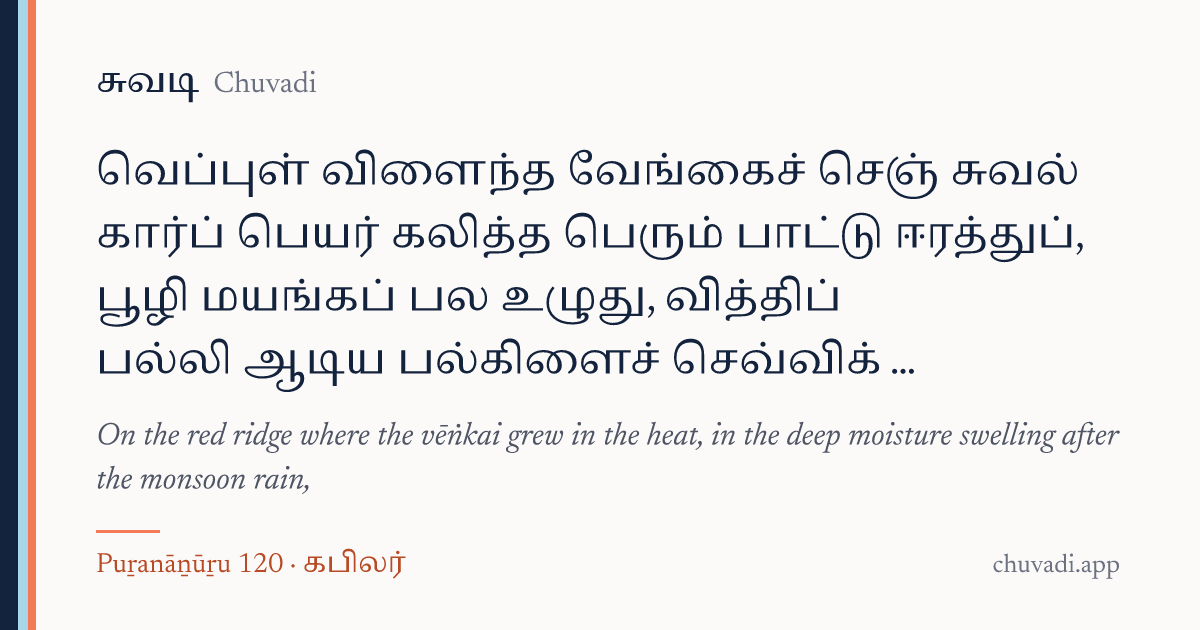
புறநானூறு 120
பாடல் · The poem
Tap a word to see where else it occurs.
பொருள் · Meaning in TamilAI
வெப்பத்தில் வேங்கை மரம் வளர்ந்த சிவந்த மேட்டு நிலத்தில், கார்மழை பொழிந்து பெருகிய மிகுந்த ஈரத்தில், புழுதி கலக்கும்படி பலமுறை உழுது விதைத்தனர். பல்லிக் கருவியால் பரம்படித்த பின் பல கிளைகளாக முளைகள் செழித்தன; களை நீக்கியதும் இலைகள் தழைத்து வளர்ந்தன; மென்மையான இறகுகளை உடைய, அண்மையில் முட்டையிட்ட பெண் மயிலைப் போல உயர்ந்து நின்றன; கரிய தாள்களைக் கடந்து கதிர்கள் ஒன்றாக விரிந்தன; கீழும் மேலும் குறைவின்றிப் பல மணிகளைத் தாங்கின. வெண்மையாக முற்றிய புதிய வரகை அறுக்கின்றனர்; தினையைக் கொய்கின்றனர்; கவ்வை கறுக்கிறது; அவரையின் செழிப்பான கொடியில் வெளிர்ந்த காய்கள் பறிக்கும் பருவத்தில் உள்ளன. நிலத்தில் புதைத்து முற்றிய கள்ளின் தெளிவைப் புல் வேய்ந்த குடிசைகள்தோறும் பகிர்ந்து தருகின்றனர்; மணமுள்ள நெய்யில் கடலையைப் பொரித்து, சோறு சமைக்க, பெரிய தட்டுகள் ஆரவாரம் செய்கின்றன. உழைப்பு வருந்தாமலே வளம் தரும் அந்த நாடு இனியும் செழிக்குமோ? அடர்ந்த கரிய கூந்தலை உடைய மகளிரின் தந்தையும், அசையும் மூங்கில் ஒலிக்கும் உயர்ந்த சிகரங்களை உடையவனும், புலவர் பாடிப் பாடியும் தீராத பண்பை உடையவனும், பகைவர் கழல் ஒலிக்க ஓடியதைக் கண்டவனும், போரில் கொடிய சேயைப் போன்றவனுமாகிய பாரியின் பெருவீரம் மிக்க நாடு அது.
பொதுவியல் திணை, கையறுநிலைத் துறை. பாடியவர் கபிலர். 'சேய்' என்பது முருகனின் பெயர்; பாரியை முருகனுக்கு ஒப்பாகப் புகழ்கிறது. 'நந்துங் கொல்லோ' என்பதை 'அழியுமோ' என்றும் கொள்ளலாம். 'பல்லி', 'பெருந் தோள் தாலம்' என்பவற்றின் சரியான பொருள் உறுதியாகத் தெரியவில்லை.
ஆங்கிலம் · English translationAI
Translation
- On the red ridge where the vēṅkai grew in the heat,
- in the deep moisture swelling after the monsoon rain,
- they ploughed many times till the dust was mixed, and sowed;
- when the harrow had passed, the many-branched shoots came up well;
- weeding cleared them, the leaves grew thick and strong,
- rising tall like a soft-feathered peahen that has newly laid,
- passing the dark stalks, the ears unsheathed all together,
- bearing grain below and above with nothing lacking;
- the new varaku, ripened white, is reaped,
- the millet plucked, the black gram darkens, the avarai's
- lush vines hang pale pods ready for picking;
- the clear liquor, matured buried in the earth,
- is given out at every hut thatched with grass;
- with fragrant ghee they roast gram till it crackles, they cook rice,
- and the big round plates clatter with eager noise —
- rich with a harvest that comes without toil; and will it flourish still,
- the land of the father of the young women with thick dark hair,
- of the one with far peaks where swaying bamboos creak, whom poets
- never tire of singing, who saw his enemies'
- clattering anklets as they fled —
- the land of great valour of the Cēy, fierce in war?
What the poem says
This long lament by Kapilar is a picture of the farming year in Pāri's dry upland. It follows the crop of varaku millet step by step: the red ridge soaked by monsoon rain, repeated ploughing, sowing, harrowing, weeding, the plants rising tall, the ears coming out and filling. Then the harvest: varaku reaped, millet plucked, black gram and avarai beans ripening, liquor that has matured buried in the ground shared out among the grass huts, gram roasted in ghee and rice cooked, plates clattering at the feast.
The tiṇai is potuviyal and the turai kaiyaṟunilai, grief after a patron's death. As in puram.119, the refrain nantuṅ kollō, 'will it flourish still?' (or possibly 'will it decline?'), hangs the whole description on a question. The land is named through its lord: the father of the dark-haired girls, the one whom poets never tire of praising, before whom enemies fled with clattering anklets.
Cēy in the last line, 'the red one', is a name of Murukaṉ; it is used here as praise of Pāri, the warrior compared to the war god. Some details are uncertain. In line 4 palli is taken as a harrow or rake drawn over the young crop; in line 15 the phrase peruntōḷ tālam is obscure — it may mean big round plates, or the plates of broad-shouldered women — and the translation takes the first.