



புறநானூறு 121
பாடல் · The poem
Tap a word to see where else it occurs.
பொருள் · Meaning in TamilAI
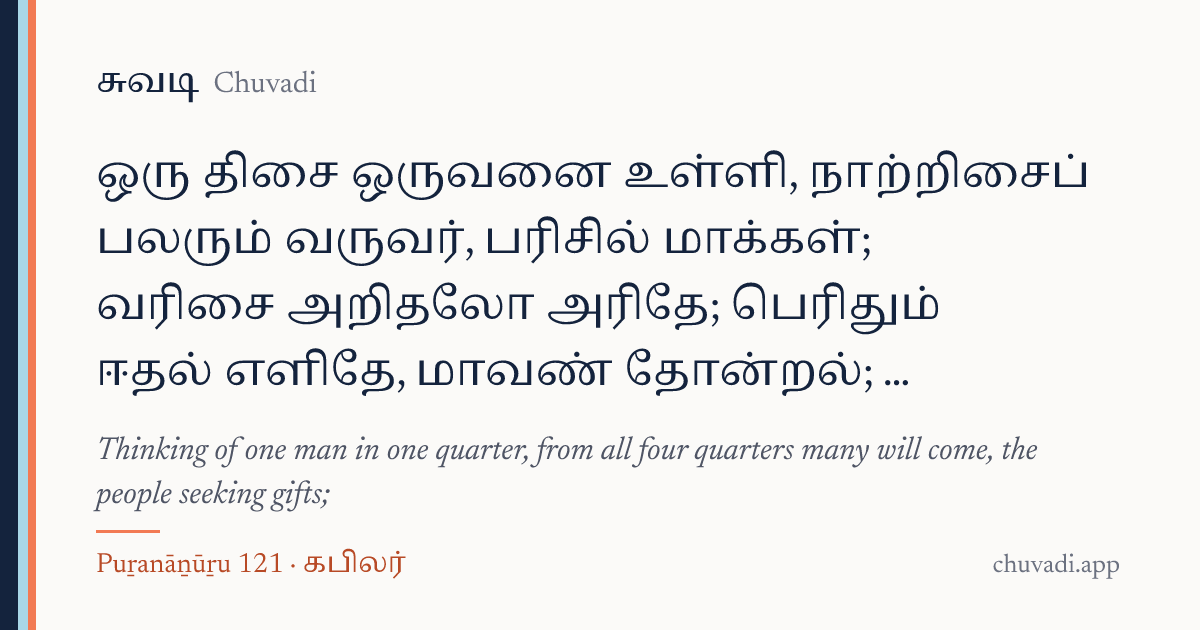
பெரும் கொடை உடைய தலைவனே! ஒரு திசையில் இருக்கும் ஒருவனை நினைத்து, நான்கு திசைகளிலிருந்தும் பரிசில் வேண்டும் மக்கள் பலர் வருவர். அவர்களுடைய தகுதியின் அளவை அறிவதுதான் கடினம்; மிகுதியாகக் கொடுப்பது எளிது. இதை நீ நன்றாக அறிந்திருப்பாயானால், புலவர்களிடம் எல்லாரையும் ஒன்றாகப் பார்க்கும் பொதுப் பார்வையை விட்டுவிடு.
பொதுவியல் திணை; துறை பொருண்மொழிக் காஞ்சி, அதாவது வாழ்க்கைக்கு உரிய பொது உண்மையை எடுத்துச் சொல்வது. பாடியவர் கபிலர்; பாடப்பட்டவன் மலையமான் திருமுடிக்காரி. கொடுப்பதைவிடத் தகுதி அறிந்து கொடுப்பதே சிறந்தது என்பது கருத்து.
ஆங்கிலம் · English translationAI
Translation
- Thinking of one man in one quarter, from all four quarters
- many will come, the people seeking gifts;
- to know their worth is hard indeed; to give
- lavishly is easy, great-handed lord;
- if you have understood that well,
- give up looking on all alike, where poets are concerned!
What the poem says
Kapilar addresses Malaiyamāṉ Tirumuṭikkāri, a generous chieftain, with a piece of advice. Suppliants come from every direction to a single famous giver. Giving a great deal, Kapilar says, is the easy part; the hard part is to recognise each one's worth and rank. So the patron should stop treating all poets the same.
The tiṇai is potuviyal, the general class, and the turai poruṇmoḻik kāñci, a poem that states a general truth about conduct. Here the truth is about discrimination in giving: a good patron must judge merit, not just hand out wealth.
The key word is varicai, 'order, rank, due measure', set against potu nōkku, 'the common gaze' that sees everyone alike. Coming from Kapilar, a poet of high standing, the advice can be read with a smile: the patron is gently reminded that some singers deserve more than others.