



புறநானூறு 122
பாடல் · The poem
Tap a word to see where else it occurs.
பொருள் · Meaning in TamilAI
வீரக்கழல் அணிந்த அழகிய அடிகளை உடைய காரியே! உன் நாடு கடலால் கொள்ளப்படாதது; பகைவரும் அதைத் தாக்க எண்ணமாட்டார்கள். ஆனால் அது வேள்வித் தீயைப் பேணும் அந்தணர்களுக்கு உரியதாகிவிட்டது. குறையாத செல்வமும் வீரம் மிக்க படையும் உடைய மூவேந்தருள் ஒருவன் 'நீ எனக்குத் துணையாக இரு' என்று புகழ்ந்து கொண்டு வந்து தரும் செல்வமோ, உன் குடியை வாழ்த்திக்கொண்டு வரும் இரவலர்களுக்கு உரியதாகிவிட்டது. வடமீனைப் போன்ற கற்பும் மென்மையான சொல்லும் உடைய உன் மனைவியின் தோள்களைத் தவிர, உனக்கென்று சொல்லிக்கொள்ள எதுவும் இல்லை. அப்படி இருந்தும் நீ பெருமிதத்தோடு விளங்குகிறாய்.
பாடாண் திணை, அதாவது தலைவனைப் புகழ்வது; துறை இயன்மொழி, அவனுடைய இயல்பையும் செயல்களையும் எடுத்துச் சொல்வது. பாடியவர் கபிலர்; பாடப்பட்டவன் மலையமான் திருமுடிக்காரி. 'வடமீன்' அருந்ததி என்று மரபாகக் கொள்வர். நான்கு முதல் ஏழு வரையிலான அடிகளின் அமைப்பு சற்றுத் தளர்வாக உள்ளது.
ஆங்கிலம் · English translationAI
Translation
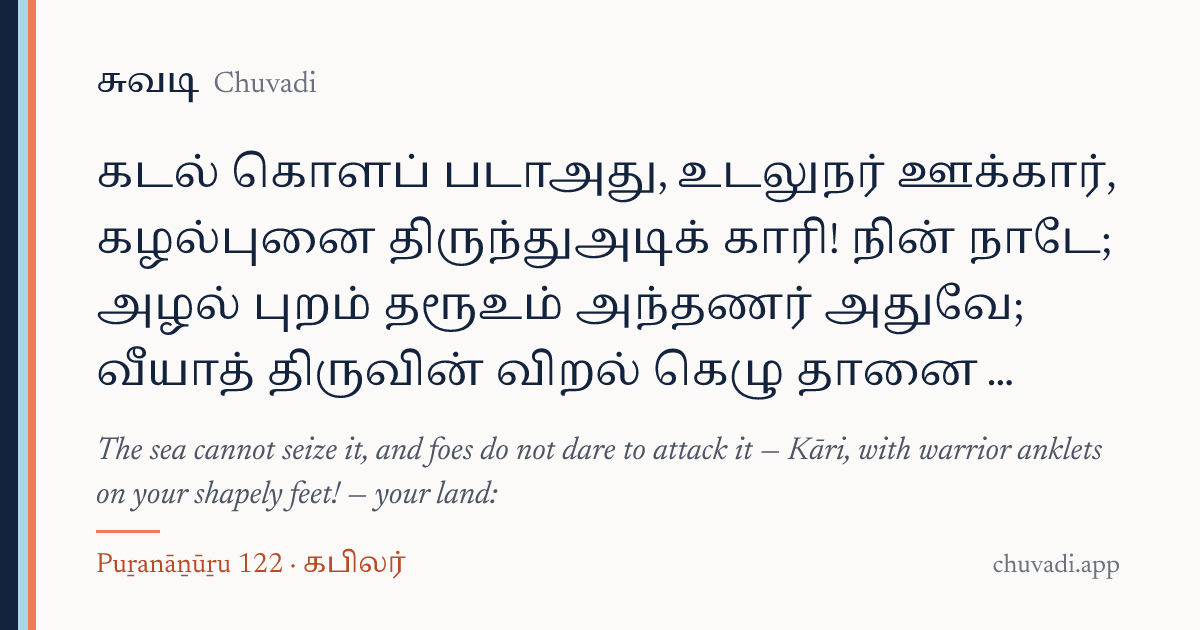
- The sea cannot seize it, and foes do not dare to attack it —
- Kāri, with warrior anklets on your shapely feet! — your land:
- it belongs to the brahmins who keep the sacred fire.
- Of unfailing fortune, with armies full of valour,
- one of the three kings says, 'Be our strength,'
- and the riches brought with praise — those, to the ones who bless your clan,
- the suppliants who come, belong.
- With chastity like the northern star, with gentle speech,
- your wife — except for her shoulders,
- you have nothing you call your own; and still you stand in pride.
What the poem says
Kapilar praises Malaiyamāṉ Tirumuṭikkāri by showing that he owns nothing. His land, safe from the sea and from enemies, he has given to brahmins who tend the sacred fire. The wealth that comes to him when one of the three crowned kings seeks his alliance — 'Be our strength!' — goes to the suppliants who come to bless his family. All that he can call his own is the embrace of his wife, chaste as the northern star; and yet he is proud.
The tiṇai is pāṭāṇ, praise of a patron, and the turai iyaṉmoḻi, praise of the patron's own nature and deeds.
The poem works by subtraction: each line takes something away from the chieftain, and what remains is greater for it. The 'northern star' (vaṭamīṉ) is the traditional image of a wife's fidelity, usually identified with Arundhatī. The detail that the three kings court Kāri for his help suggests that his support was valued in their wars, but the poem says no more than that. Lines 4–7 are syntactically loose, and the translation follows the most natural reading.