



புறநானூறு 123
பாடல் · The poem
Tap a word to see where else it occurs.
பொருள் · Meaning in TamilAI
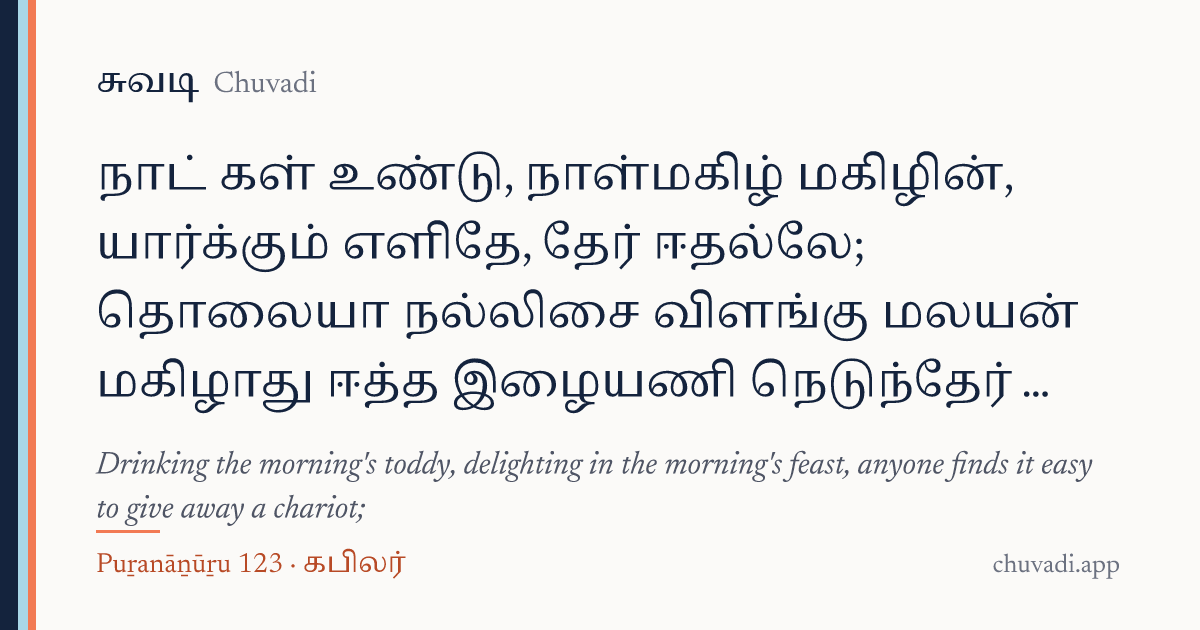
காலையிலேயே கள் குடித்து, காலை விருந்தில் மகிழ்ந்திருக்கும்போது, யாருக்கும் தேரைக் கொடுப்பது எளிதுதான். ஆனால் அழியாத நல்ல புகழ் உடைய மலையன், கள்ளின் மயக்கம் இல்லாமலேயே அணிகள் பூண்ட உயர்ந்த தேர்களைக் கொடுத்தான். அவன் கொடுத்த தேர்கள், வளம் நிறைந்த முள்ளூர் மலையின் உச்சியில் பெய்த மழையின் துளிகளைவிட மிகுதியானவை.
பாடாண் திணை, இயன்மொழித் துறை. பாடியவர் கபிலர்; பாடப்பட்டவன் மலையமான் திருமுடிக்காரி. மயக்கத்தில் கொடுப்பதைவிடத் தெளிவோடு கொடுப்பதே உண்மையான கொடை என்பது கருத்து. ஐந்தாம் அடியில் உள்ள 'பயன்கிழு' என்பது 'பயன்கெழு' என்பதன் அச்சுப் பிழையாகத் தெரிகிறது.
ஆங்கிலம் · English translationAI
Translation
- Drinking the morning's toddy, delighting in the morning's feast,
- anyone finds it easy to give away a chariot;
- but the shining Malaiyaṉ of unfading good fame
- gave, not drunk, tall chariots decked with ornaments,
- and they are more than, on the heights of fruitful Muḷḷūr,
- the drops of the rain that falls there.
What the poem says
A neat little poem of praise from Kapilar to Malaiyaṉ, that is, Malaiyamāṉ Tirumuṭikkāri. Anyone, the poet says, can give away a chariot after a morning of drinking and feasting, when the liquor makes him open-handed. Malaiyaṉ gave his jewelled chariots sober, and gave so many that they outnumber the raindrops falling on the summit of Muḷḷūr, his hill.
The tiṇai is pāṭāṇ, praise of a patron, and the turai iyaṉmoḻi, praise of his nature and deeds.
The contrast between drunken and sober giving is the heart of it: true generosity is deliberate. The comparison with the rain on Muḷḷūr ties the patron's giving to his own land, where rain, like his gifts, never fails. The edition prints payaṉkiḻu in line 5, which is evidently a misprint for payaṉkeḻu, 'fruitful, rich in yield'.